Best Humidity Level for Sleeping When Sick: Aim for 40–50% RH
Dadfficient is reader-supported. If you buy through my links, I may earn a commission at no extra cost to you. I only recommend gear that passes the “Dad Test.”
Best humidity level for sleeping when sick? Aim for roughly 40% to 50% relative humidity if dry air is making congestion, a sore throat, or a dry cough more uncomfortable.
That range gives you enough moisture to make dry indoor air feel more comfortable without pushing the bedroom into the excessive-humidity range where condensation and mold problems become more likely.
The broader EPA guidance for indoor humidity is generally around 30% to 50%, so think of 40% to 50% as a practical comfort target rather than a magic medical number.
Quick Dad Verdict
- Best target when sick: About 40% to 50% RH.
- Too dry: Dry air can make the nose, throat, and airways feel more irritated.
- Too humid: Reduce output if you see condensation on windows, walls, or furniture.
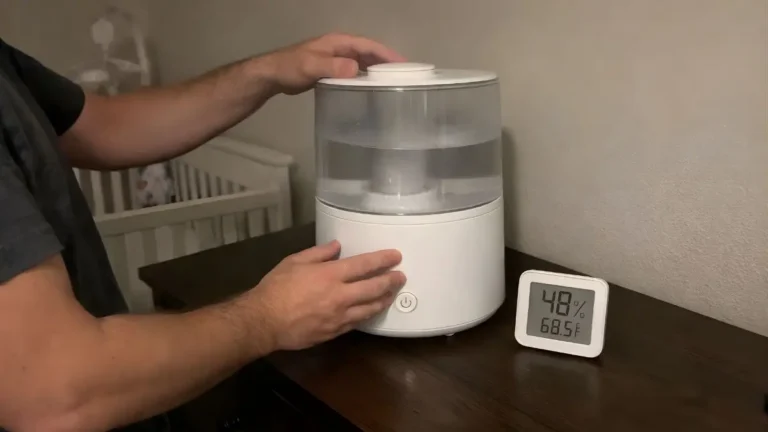
- Use a hygrometer: Measure the room instead of guessing from the mist setting.
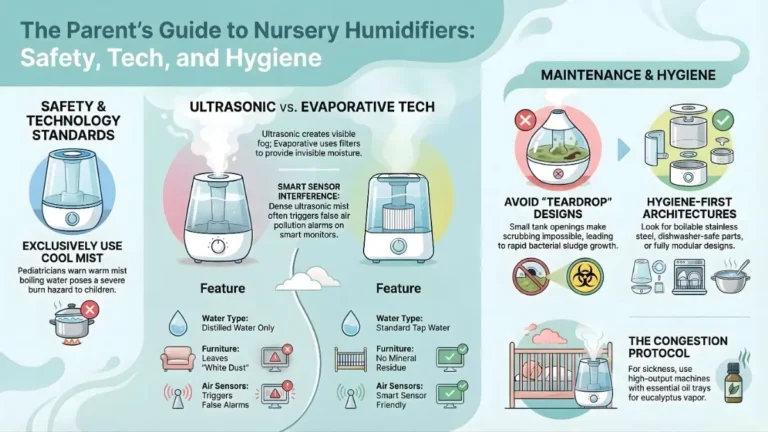
- For children: Use cool mist and follow the same general 30% to 50% indoor-humidity range.
What Is the Best Humidity Level for Sleeping When Sick?
The best humidity level for sleeping when sick is usually around 40% to 50% RH.
That does not mean you need to hold the room at exactly 45% all night. The goal is to avoid air that is excessively dry while also preventing the room from becoming damp.
When indoor air is very dry, the tissues lining your nose and throat can become dry and irritated. That can make congestion, a scratchy throat, and a dry cough feel worse when you are trying to sleep.
Adding moderate humidity may make those symptoms feel more comfortable, especially during winter when indoor heating can drive humidity down.
But more moisture is not always better. If windows start fogging heavily or walls and furniture feel damp, turn the humidifier down.
Why Dry Air Can Make Congestion Feel Worse
Your nose and respiratory tract rely on moisture to help maintain normal mucus movement and airway comfort.
Very dry indoor air can dry the nasal passages and throat, making mucus feel thicker and irritation more noticeable.
That is why the ideal humidity for breathing during a cold is not about flooding the room with moisture. It is about getting the bedroom back into a moderate range where the air does not feel excessively dry.
For most people, roughly 40% to 50% RH is a practical place to start.
Do Humidifiers Help You Sleep?
Do humidifiers help you sleep? They can help when dry air is one of the reasons you are uncomfortable.
A humidifier may make sleep more comfortable if you are dealing with:
- dry nasal passages
- a dry or irritated throat
- a dry cough
- winter heating that has lowered indoor humidity
- congestion that feels worse in dry air
A humidifier does not treat the virus or infection itself, and it will not automatically stop coughing or guarantee better sleep.
Think of humidity control as one part of making the bedroom more comfortable while you recover.
How to Run a Humidifier Overnight When Sick
Running the humidifier overnight is reasonable if you monitor the room and maintain the machine correctly.
1. Use a Hygrometer
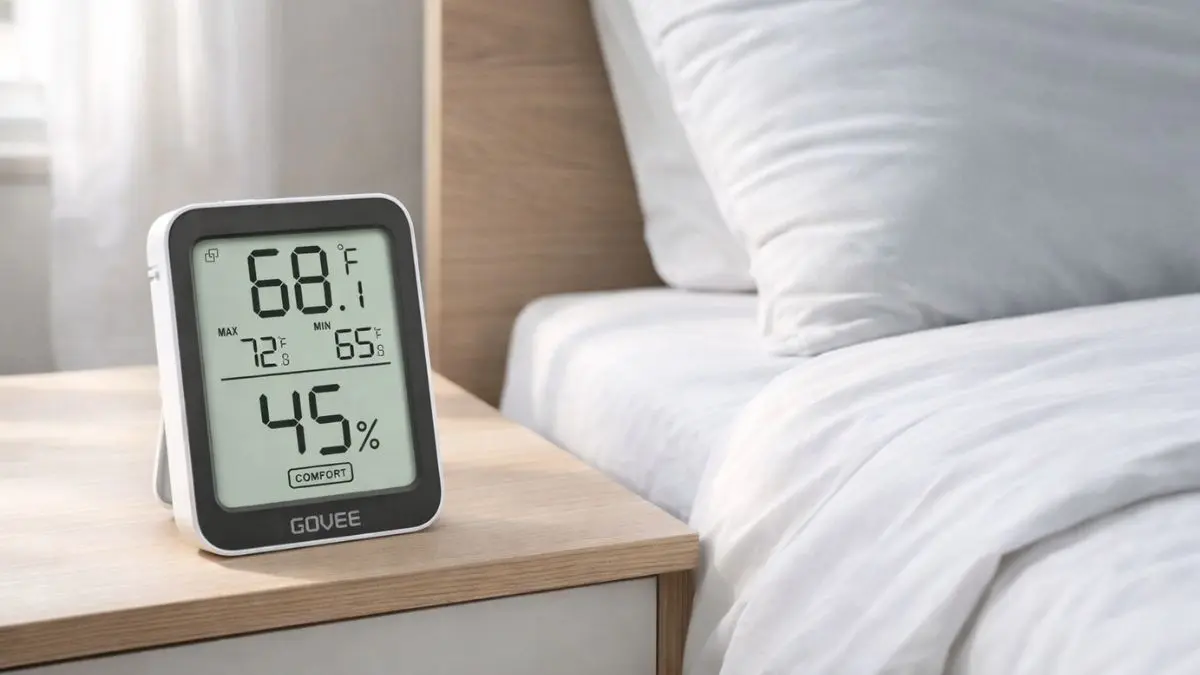
A digital hygrometer is the easiest way to know whether you actually need more humidity.
Built-in sensors can be useful, but an independent hygrometer elsewhere in the bedroom gives you another reference point.
If the room is already around 45% to 50% RH, increasing mist output further is unlikely to help.
2. Stop If You See Condensation
Visible moisture on windows is one of the simplest warning signs that the bedroom is becoming too humid.
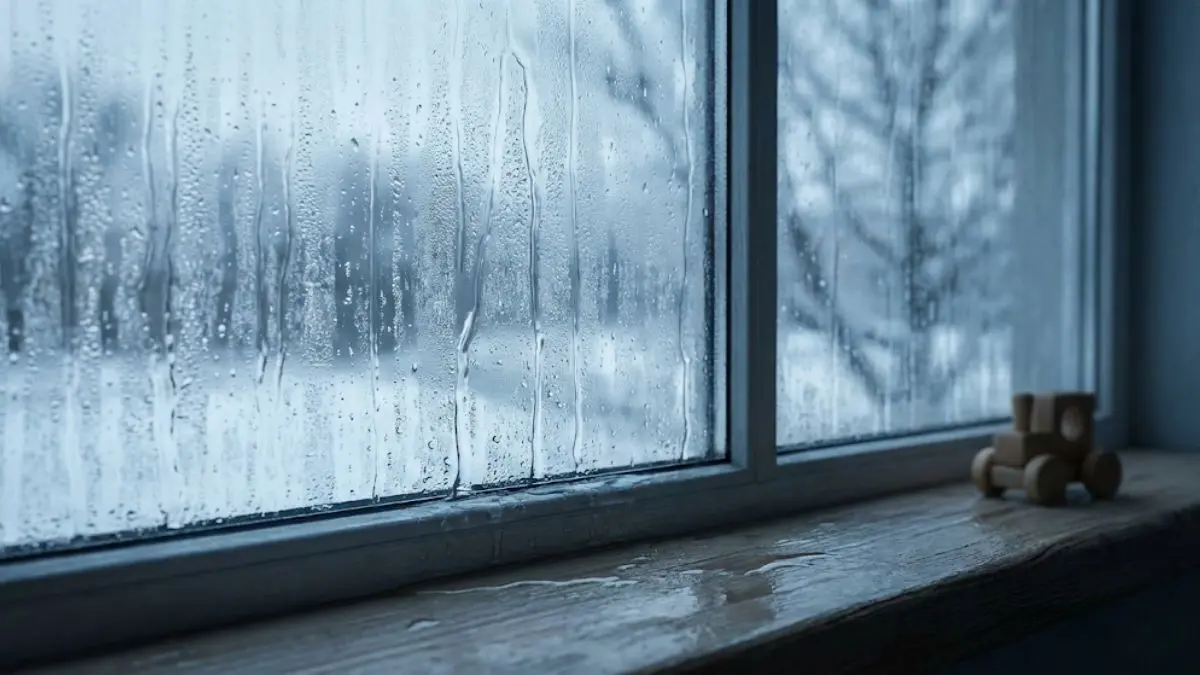
If you notice condensation, damp walls, wet curtains, or moisture collecting on furniture, lower the setting or shut the humidifier off.
3. Use the Right Water for Your Humidifier
Water choice matters most with ultrasonic humidifiers.
Minerals in tap water can collect inside the machine and may also be dispersed into the room as white dust.
The EPA recommends lower-mineral water, such as distilled water, when practical to reduce mineral buildup and dispersal.
If you use an evaporative humidifier, the wick or filter captures much of the mineral material before moisture enters the room.
For more detail, see:
Is Humidifier White Dust Harmful?.
4. Change the Water Daily
Do not continuously top off yesterday’s water.
Empty portable humidifiers regularly, refill with fresh water, and follow the manufacturer’s cleaning instructions.
The EPA recommends emptying, wiping dry, and refilling portable humidifiers daily when they are in use.
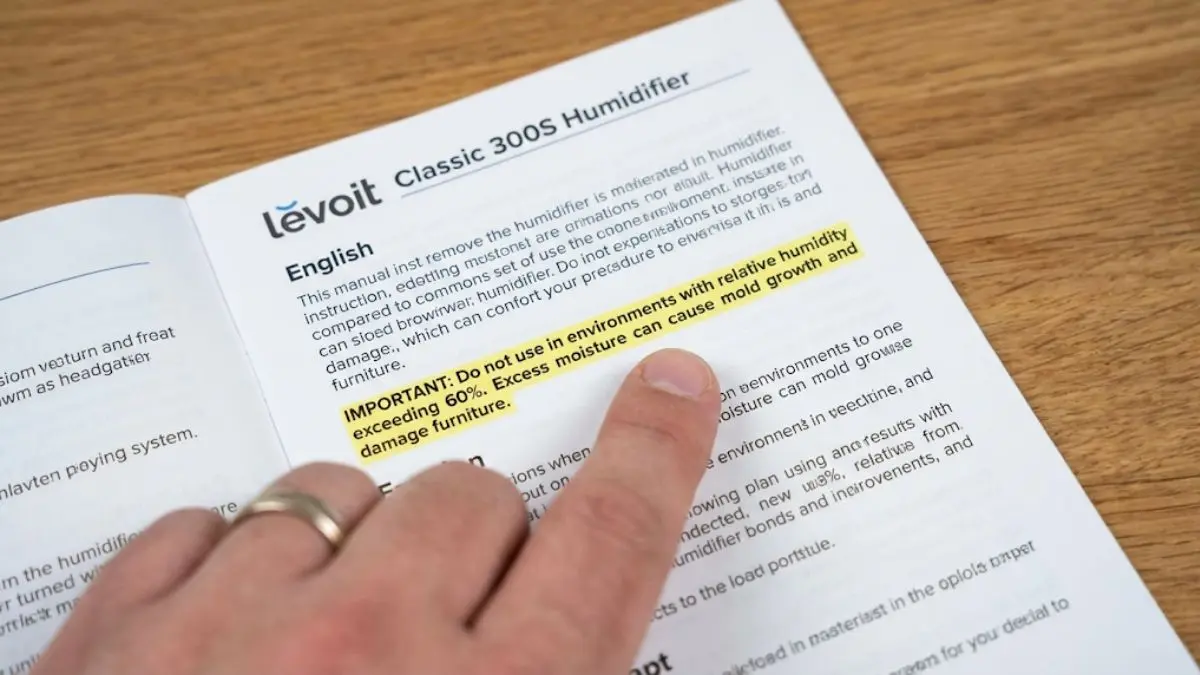
Best Humidity Level for Sleeping Baby When Sick
The best humidity level for sleeping baby is generally within the same moderate indoor range used for the rest of the home: about 30% to 50% RH.
If the nursery feels especially dry, aiming around 40% to 50% is a reasonable comfort target.
For babies and young children, cool-mist humidifiers are generally preferred because they avoid the burn risk associated with hot water and steam.
Do not direct mist at the baby’s face, bedding, or crib, and keep both the humidifier and power cord completely out of reach.
For the full nursery safety setup, see:
Humidifier Safe for Infants.
For placement specifically, use:
Where to Place Humidifier in Baby Room.
The Dad Test: Overnight Humidifier Setup
The simplest overnight setup is not complicated:
Dad Test: Sick-Room Humidity Checklist
- Target: Start around 40% to 50% RH.
- Measure: Use a hygrometer instead of relying on mist level alone.
- Surface: Put the humidifier on a stable, hard, water-resistant surface.
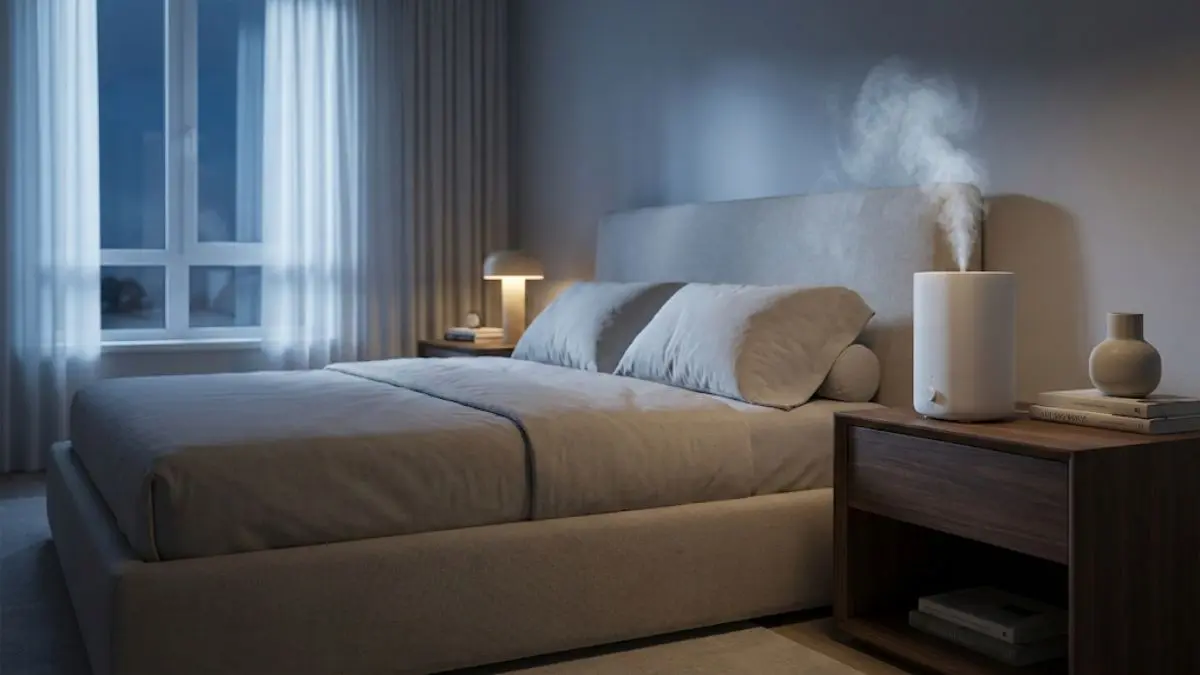
- Mist: Aim toward open room air, not the bed, wall, curtains, or electronics.
- Water: Use lower-mineral water when practical in ultrasonic models.
- Maintenance: Replace old water and clean the unit regularly.
Step 1: Position the Humidifier Correctly
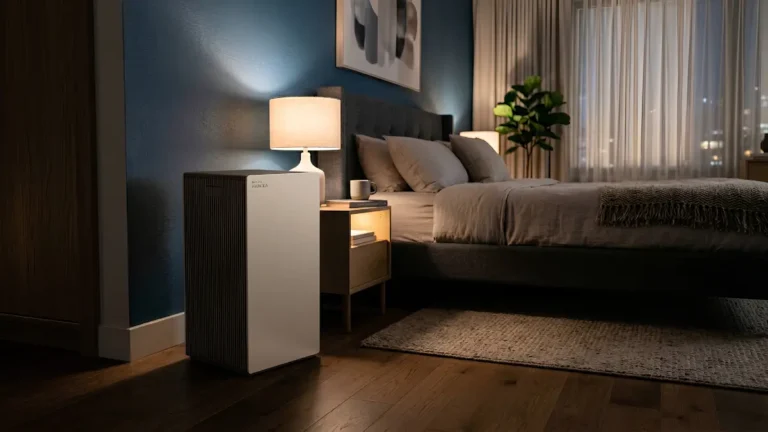
Place the humidifier on a stable, flat, hard surface where it cannot be knocked over.
You do not need to place it three feet off the floor. What matters is that the surface is stable, water-resistant, and positioned so the mist does not soak nearby objects.
If you are using it around a child, keep the machine and cord completely out of reach.
Step 2: Keep It Away From the Air Purifier Sensor
If you also run an air purifier, avoid pointing ultrasonic mist directly at the purifier.
Some optical particle sensors may temporarily interpret fine water droplets or mineral particles as airborne pollution.
Separating the devices or switching the purifier to a manual setting can reduce those false readings.
For the full setup, see:
Air Purifier vs Humidifier.
Step 3: Dump and Refill
When you wake up, empty the old water instead of leaving it sitting in the humidifier all day.
Let water-contact surfaces dry when appropriate and refill with fresh water before the next use.
When Should You Turn the Humidifier Off?
Turn the humidifier down or off if:
- the room reaches about 50% RH
- windows are collecting condensation
- walls or furniture become damp
- the room feels muggy
- the humidifier develops visible contamination or odor
- your cough or breathing symptoms seem worse while it is running
If you are struggling with coughing specifically, see:
Humidifier Causing Cough.
Frequently Asked Questions
What is the best humidity level for sleeping when sick?
The best humidity level for sleeping when sick is usually around 40% to 50% RH. This provides moderate moisture without pushing the room into an excessively humid range.
What is the ideal humidity for breathing with a stuffed nose?
The ideal humidity for breathing when congested is generally a moderate indoor range rather than very humid air. Around 40% to 50% RH is a practical starting point if dry air is making your nose or throat uncomfortable.
Do humidifiers help you sleep if you have a cold?
A humidifier may help you sleep more comfortably if dry air is contributing to congestion, throat irritation, or a dry cough. It does not treat the infection itself, and more humidity is not always better.
Do humidifiers help you sleep if you are not sick?
They can be useful when your bedroom air is unusually dry and you wake with a dry nose, throat, lips, or skin. If the room is already within a comfortable humidity range, adding more moisture may not provide a benefit.
What is the best humidity level for sleeping baby during winter?
The best humidity level for sleeping baby during winter is generally within the 30% to 50% indoor range. If the room is very dry, roughly 40% to 50% can be a practical comfort target while avoiding condensation.
Should I run a humidifier all night when sick?
You can run a humidifier overnight if you monitor the room humidity and maintain the machine properly. Reduce or stop the humidifier if the room approaches 50% RH or if you notice condensation or damp surfaces.
-
Environmental Protection Agency (EPA):
Guidance on indoor humidity, portable humidifier maintenance, mineral buildup, water choice, and condensation. -
HealthyChildren.org / American Academy of Pediatrics:
Guidance on cool-mist humidification for children with stuffy noses and dry coughs. -
National Institutes of Health / PMC:
Research discussing humidity, airway defenses, mucociliary function, and respiratory-virus transmission.