3 Rules: Best Humidity Level for Sleeping When Sick (2026)
Dadfficient is reader-supported. If you buy through my links, I may earn a commission at no extra cost to you. I only recommend gear that passes the “Dad Test.”
If you’re trying to fix a dry cough or a stuffed-up nose without turning it into a weekend project, here is the Dadfficient answer.
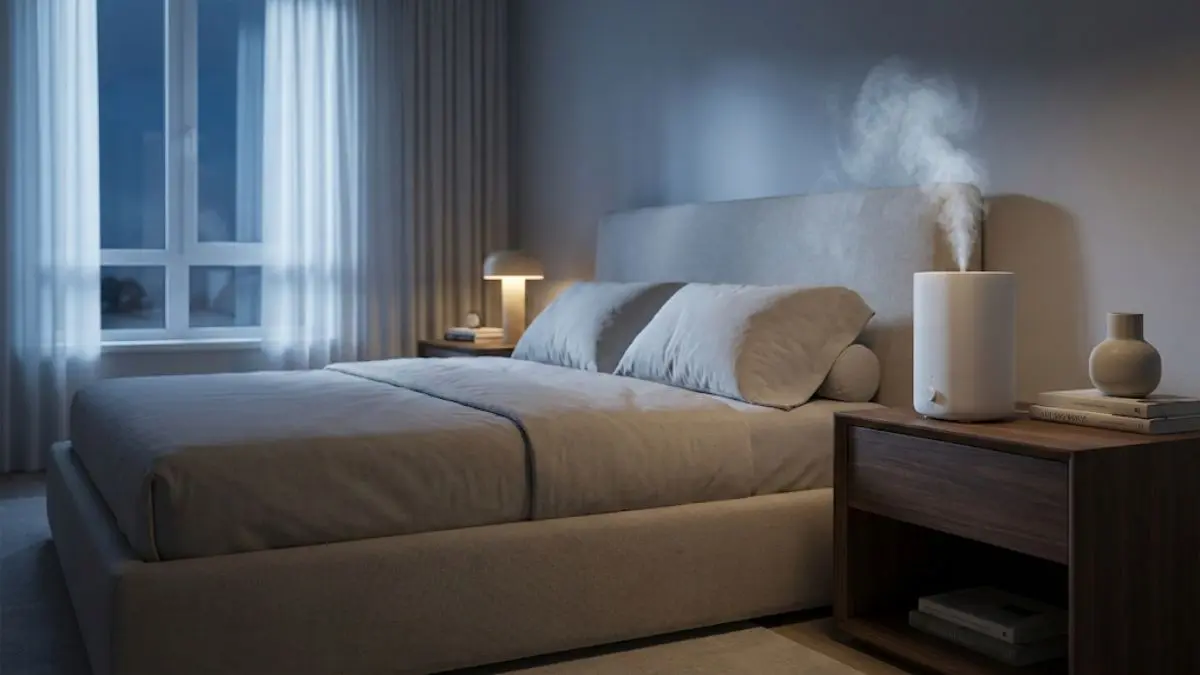
The best humidity level for sleeping when sick is between 40% and 60%.
Anything lower than 40% dries out your mucous membranes, making a cough worse and allowing respiratory viruses to thrive.
Anything over 60% turns your bedroom into a swamp, creating a breeding ground for mold and dust mites.
Hitting that sweet spot is the fastest way to relieve congestion, soothe a sore throat, and actually get some sleep when you or your kids are under the weather.
Key Takeaways: The Operator’s Summary
- The Target Zone: Maintain 40% to 60% relative humidity. Use a cheap standalone hygrometer to verify; don’t trust the humidifier’s built-in sensor.
- The Baby Rule: The best humidity level for sleeping baby is the exact same (40-60%), but you must strictly use a cool mist humidifier to eliminate burn hazards.
- The Maintenance Reality: If you don’t empty and dry the tank daily, you are blasting bacteria into your lungs.
- The Placement Shortcut: Keep the humidifier at least 3 feet off the floor and 3 feet away from the bed to prevent soaked sheets and damaged drywall.
Why 40% to 60% is the Ideal Humidity for Breathing
When you are dealing with a cold, the flu, or RSV, your respiratory tract is inflamed. Breathing dry air pulls moisture directly out of your throat and nasal passages.
This thickens your mucus, makes it harder to clear your airways, and triggers violent coughing fits the second your head hits the pillow.
By raising the relative humidity to the ideal humidity for breathing (that 40-60% window), you are actively lubricating those irritated airways.
The moisture thins out the mucus, allowing your body to naturally drain it while you sleep.
I have seen this work firsthand. Dialing in the humidity is often the difference between a kid waking up coughing every hour and a kid actually sleeping through the night.
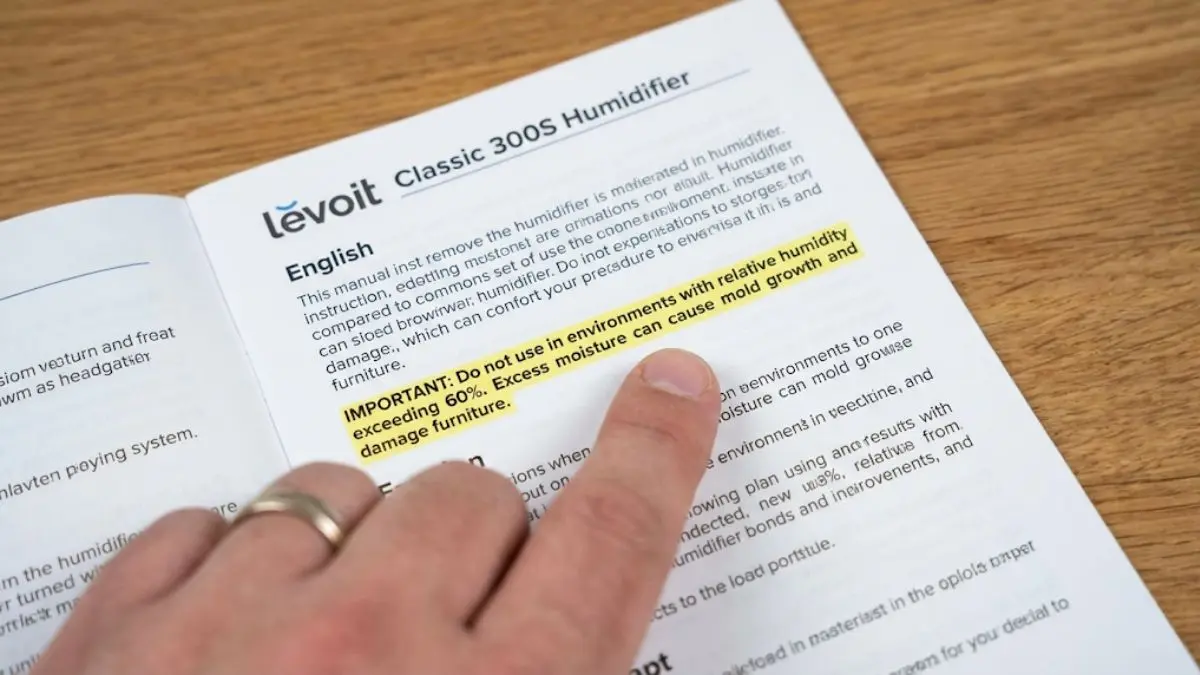
But you cannot just crank the humidifier to the max and go to sleep. The Environmental Protection Agency (EPA) strictly warns against letting indoor humidity exceed 60%.
Once you cross that line, condensation builds up on windows, and mold spores begin to multiply in your carpets and drywall.
You are trading a temporary cold for a permanent allergy problem.
3 Rules: Best Humidity Level for Sleeping Baby
When a toddler or infant is sick, the stakes are higher. You cannot give them traditional cold medicine, so environmental controls like humidity and temperature are your only real tools.
Here are the three non-negotiable rules for managing a sick baby’s room.
Rule 1: Use Cool Mist Only (No Exceptions)
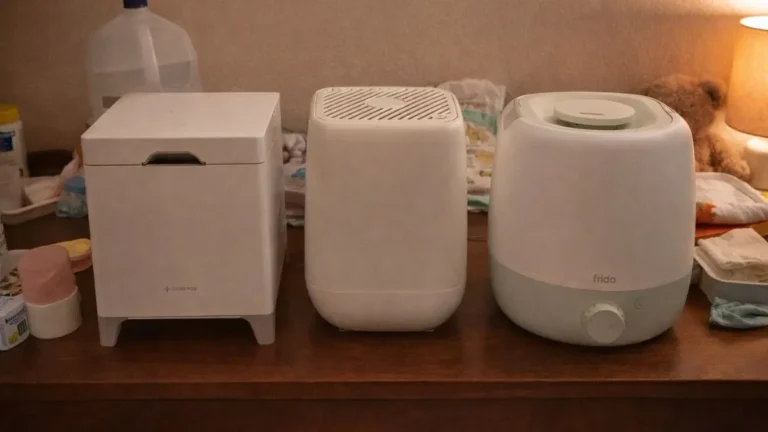
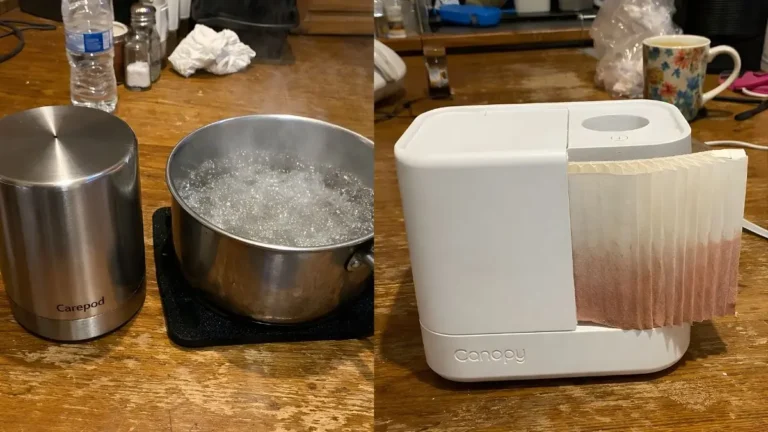
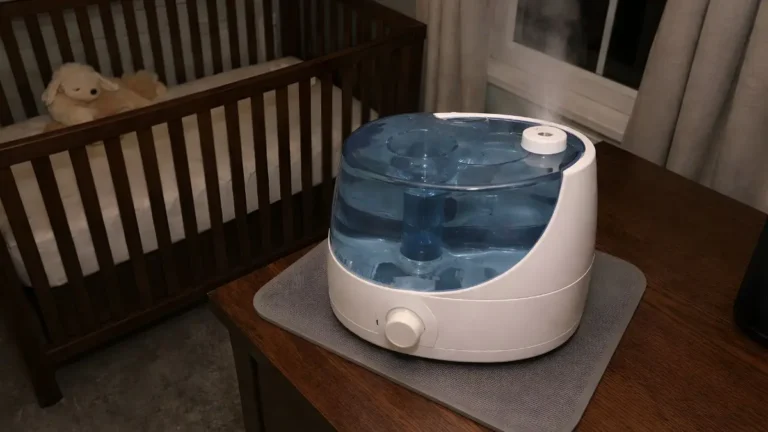
The American Academy of Pediatrics (AAP) is explicit about this: only use cool mist humidifiers in homes with children. Warm mist humidifiers (vaporizers) boil water to create steam.
If a toddler grabs the cord and pulls a vaporizer off a nightstand, the boiling water can cause severe, immediate burns.
Cool mist is just as effective at reaching the best humidity level for sleeping baby, and it eliminates the safety hazard completely.
Rule 2: Don’t Trust the Built-in Sensor
Most mid-range humidifiers have a built-in humidistat that claims to automatically shut off the unit when it hits 50%. In my testing, these sensors are wildly inaccurate.
Because the sensor is located directly next to the moisture output, it thinks the room is at 50% when the other side of the room is still bone dry at 30%.
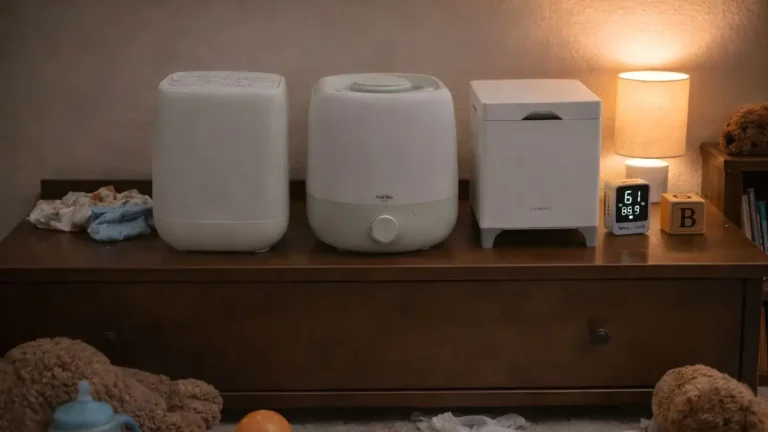
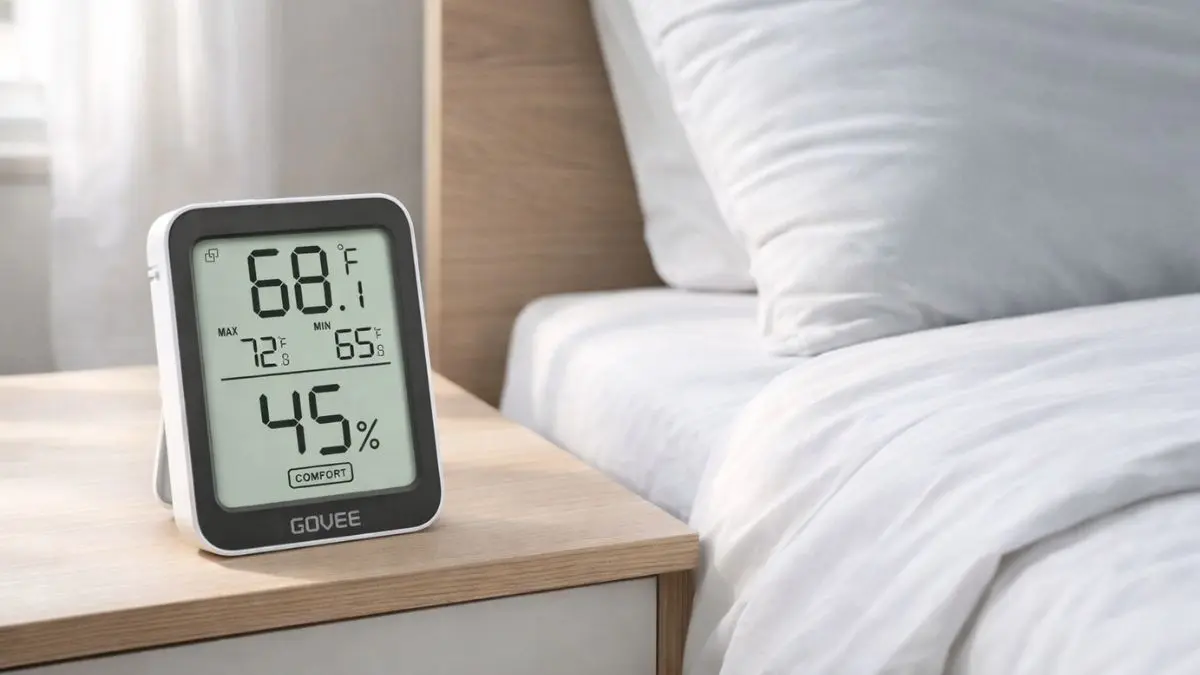
Buy a standalone digital hygrometer for $10 and place it across the room, near the crib. That is your source of truth.
Rule 3: The Distilled Water Reality Check
If you use an ultrasonic humidifier (the quiet ones that shoot a visible plume of mist) and fill it with tap water, you will likely wake up to a layer of fine white dust covering your furniture.
Those are the vaporized minerals from your tap water. While generally harmless, breathing in mineral dust isn’t ideal for inflamed, sick lungs.
If you have hard water, you must use distilled water.
If you refuse to buy jugs of distilled water, buy an evaporative humidifier instead. They use a wick filter to trap minerals before pushing moisture into the air.
The Science: Best Humidity Level for Sleeping When Sick
Yes, but it is not magic. It is simple biology. Do humidifiers help you sleep? They do, because your body relies on moisture to keep its internal defense mechanisms running.
Inside your nose and throat are tiny hair-like structures called cilia. Their job is to sweep mucus, bacteria, and viruses out of your respiratory system.
When the air drops below 30% humidity—which happens constantly in the winter when your furnace is running—those cilia dry out and paralyze.
The mucus hardens, the congestion settles in your chest, and your brain forces you to wake up and cough to clear the blockage.
By introducing a humidifier to hit that 40-60% target, you are rehydrating the cilia.
They start sweeping again, the mucus thins, and you stop waking yourself up with a hacking cough.
The Dad Test: Humidifier Setup Shortcut
I have ruined a hardwood nightstand and set off false fire alarms by setting up humidifiers incorrectly. Here is the setup shortcut to avoid the headaches.
Dad Test Metrics: Humidifier Management
- Install Ease: 8/10 (Plug it in, fill it up. Simple).
- WAF (Wife Acceptance Factor): 7/10 (They look bulky and ugly, but the sleep improvements override the aesthetics).
- Toddler-Proof: 4/10 (Kids love to press the buttons and play in the mist. You must place it out of reach).
- Reliability: 5/10 (They require constant cleaning and refilling. This is not a set-and-forget device).
Step 1: Placement. Never put a humidifier directly on the floor, especially carpet.
The mist will fall and soak the ground. Put it on a water-resistant table or dresser, at least 3 feet off the ground, and angle the nozzle toward the center of the room.
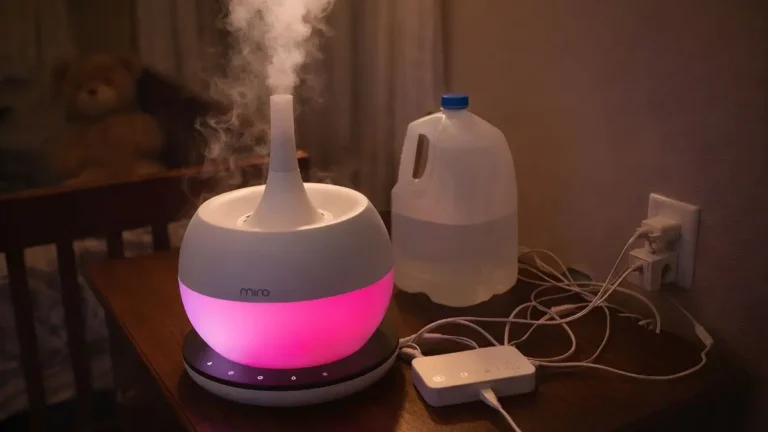
Step 2: Ecosystem Conflict Warning. If you run a smart air purifier in the same room, put it on the opposite wall. Ultrasonic humidifiers blast water particles into the air.
Your air purifier’s PM2.5 laser sensor will read those water droplets as massive air pollution.
The purifier’s fan will ramp up to maximum speed, creating a wind tunnel while you are trying to sleep.
Turn the purifier down to a low manual setting, or use an evaporative humidifier.
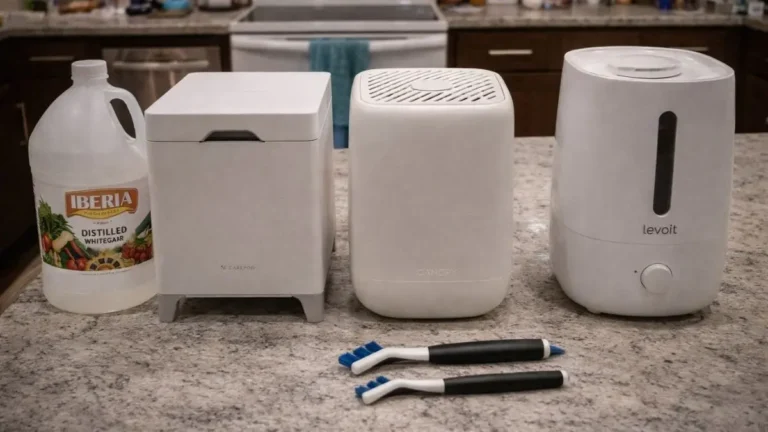
Step 3: The Daily Dump. When you wake up, do not leave stagnant water sitting in the tank all day. Dump it out, leave the cap off, and let the tank air dry.
Refill it with fresh water right before bedtime.
If you leave water sitting, pink mold and bacteria will grow in 48 hours, and you will blow it directly into your sick kid’s face the next night.
Frequently Asked Questions (FAQ)
What is the ideal humidity for breathing with a stuffed nose?
The ideal humidity for breathing when congested is between 40% and 50%.
This level provides enough moisture to thin out thick mucus and soothe an irritated throat without crossing into the 60%+ danger zone where mold begins to grow in your home.
Do humidifiers help you sleep if you don’t have a cold?
Yes. Even if you are not sick, running a humidifier in the dry winter months prevents you from waking up with a dry mouth, cracked lips, and a scratchy throat.
Keeping the room at 45% humidity prevents the air from pulling moisture out of your skin and airways overnight.
What is the best humidity level for sleeping baby during winter?
The best humidity level for a sleeping baby during winter is 40% to 50%.
Winter air is naturally dry, and central heating dries it out further.
Using a cool mist humidifier to maintain this target zone prevents infant nasal congestion and keeps their sensitive skin from drying out.
- Environmental Protection Agency (EPA): Verified indoor humidity guidelines to prevent mold growth (keep between 30-50%, strictly under 60%).
- American Academy of Pediatrics (AAP): Verified recommendation strictly advising the use of cool-mist humidifiers over warm-mist vaporizers to prevent pediatric burn injuries.
- National Institutes of Health (NIH): Verified the biological relationship between dry air, paralyzed cilia, and the increased survival and spread of respiratory viruses.