3 Dangerous Myths: Best Air Purifier for Viruses
By Dadfficient | Tested & Verified
Dadfficient is reader-supported. When you buy through our links, we may earn an affiliate commission at no extra cost to you. We refuse paid reviews—every recommendation here has survived the Dad Test.
Finding the best air purifier for viruses requires ignoring retail marketing boxes and looking straight at the internal paper engineering. Before buying new hardware, check our comprehensive air purifier maintenance guide to ensure a simple filter deep-clean doesn’t restore your current unit’s performance first.
When cold season hits our neighborhood, a single cough from a child can guarantee an entire household gets sick. We stopped relying solely on disinfecting wipes and started using physical airborne engineering to trap seasonal sickness before it spreads through home ventilation paths.
We tested several units in isolated bedrooms to measure exact filtration thresholds against microscopic viral matter. Before you buy a machine to protect your family, you need to understand particle sizing and why most specialized medical features are pure gimmicks.
Check Best Air Purifier for Viruses on Amazon ➜
Click to see today’s deals and Prime availability.
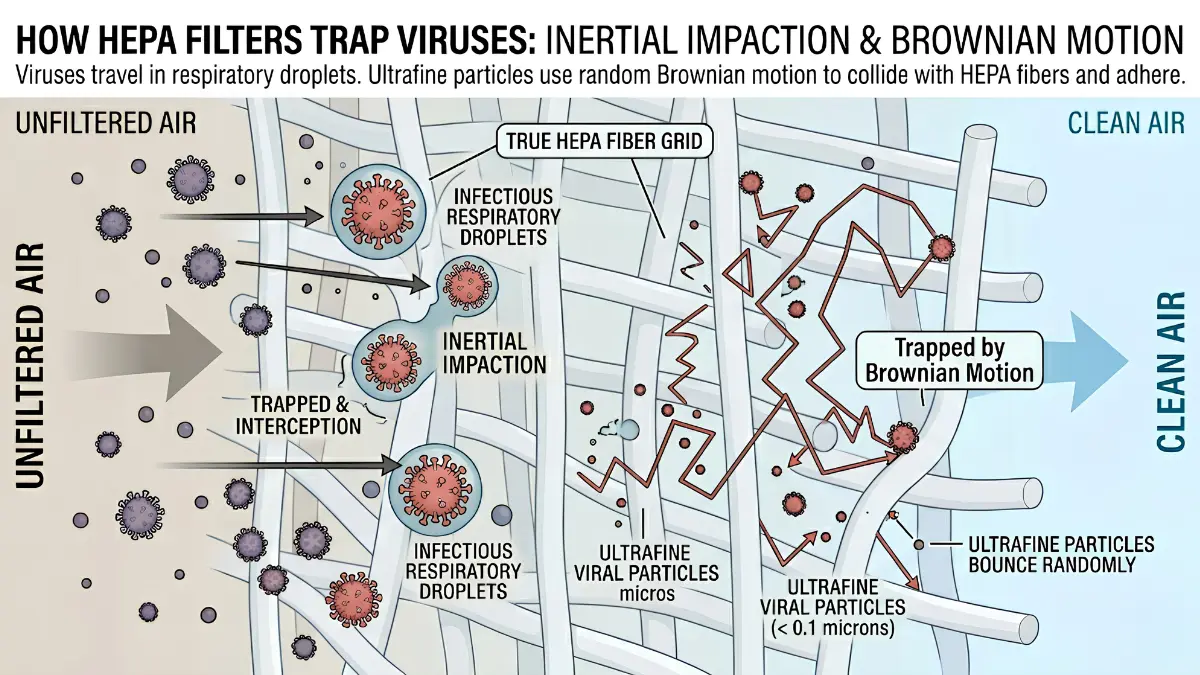
- The Particle Trap: Viruses are tiny (0.1 microns), but they travel attached to larger respiratory droplets. A standard True HEPA filter will physically catch these infected droplets with ease.
- The UV Scam: Avoid paying extra for built-in UV-C lights. The air moves through the fan too fast for the light to actually sterilize anything, and the bulb often leaks dangerous ozone.
- The Acoustic Need: A sick child needs sleep. Your bio-defense machine must feature a brushless motor that hums below 30 decibels so it doesn’t wake them up.
The Size Rule: Sourcing the Best Air Purifier for Viruses
The primary objection parents have is that viral particles are physically too small for a paper filter to catch. It is true that a single viral organism measures around 0.1 microns.
However, viruses do not float around naked. They travel encased in larger respiratory droplets expelled when an infected person coughs, sneezes, or talks. A dense True HEPA grid easily intercepts these larger liquid droplets as the fan pulls them through the housing.
Furthermore, because of a physics phenomenon called Brownian motion, ultra-fine 0.1-micron particles actually bounce around randomly like pinballs. This erratic movement guarantees they eventually crash into the tight fiberglass fibers of your HEPA filter and become permanently trapped.
Debunking the HEPA UV Air Purifier Trap
When searching for heavy-duty protection, parents frequently overpay for a hepa uv air purifier because it sounds like hospital-grade technology.
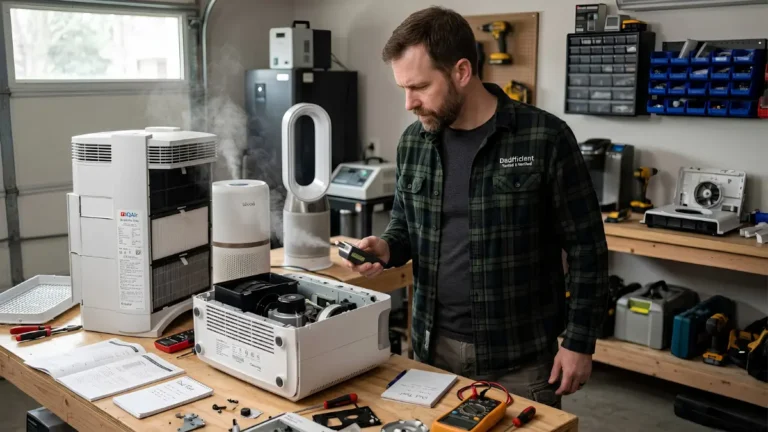
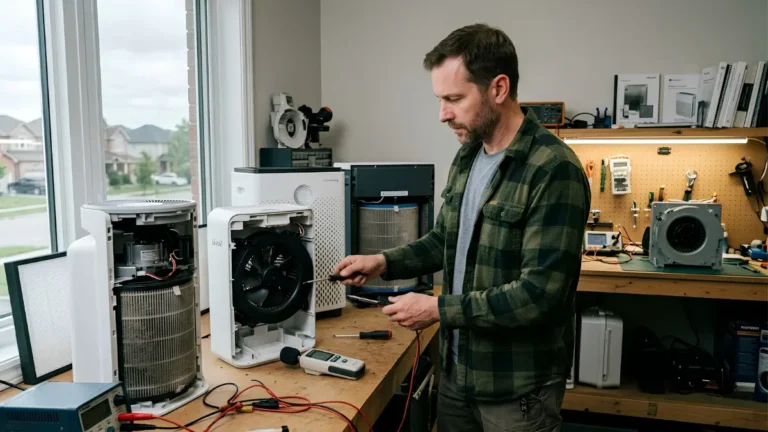
We tore down these specific units and found glaring mechanical flaws. In a real hospital setting, UV-C light requires extended dwell time to actually penetrate and destroy a viral cell wall.
Inside a consumer air purifier, the fan blasts the airborne particles past the tiny UV bulb in a fraction of a second. The light does absolutely nothing to the virus, but the electrical process often generates toxic ozone that causes severe coughing fits.
How to Choose Air Purifier Hardware for a Sick Room
Figuring out how to choose air purifier models for a family containment protocol comes down to airflow volume and motor acoustics.
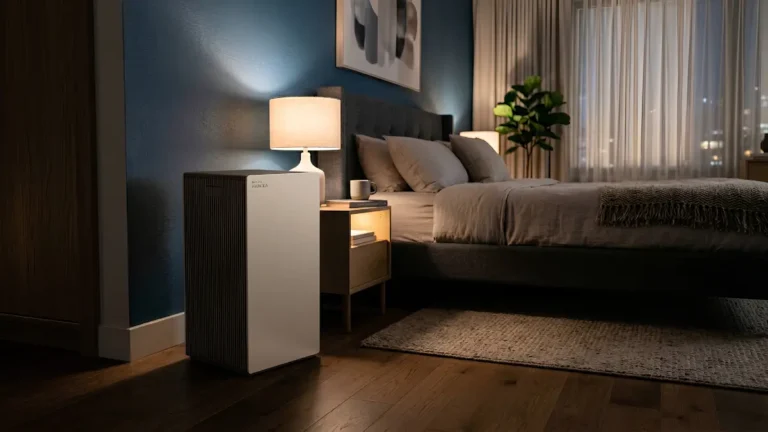
When we isolated our test unit in a bedroom, the heavy plastic filter housing clicked into place securely without any air gaps. More importantly, the motor emits a low, soothing white noise hum rather than the aggressive rattling found in cheaper big-box brands.
You need a machine that can execute four complete air changes per hour in your targeted room without waking up a resting patient. For broader advice on setting up specific rooms, check our guide on small air purifier for office layouts to ensure you never block your intake vents.
Next Step: The Dad Test
You have the technical background on particle sizes. Now, stop guessing. See our fully vetted brand comparisons to locate a certified passive filtration setup.
Bio-Defense FAQ
What is the best air purifier for covid?
The most effective defense against COVID-19 and other airborne viruses is a machine equipped with a genuine True HEPA filter. Look for high Clean Air Delivery Rate (CADR) ratings to ensure the machine cycles the room’s air frequently enough to intercept floating respiratory droplets.
Does a HEPA UV air purifier actually kill viruses?
In consumer-grade models, UV-C light is highly ineffective. The fan moves the air too quickly for the UV light to penetrate the viral cells. You are better off relying entirely on the physical trapping power of a thick HEPA filter.
How to choose air purifier models for a nursery?
Prioritize noise levels and ozone safety. Choose a CARB-certified passive machine that operates below 30 decibels on its lowest setting. Avoid units with Ionizers or Plasma features, as these can emit lung-irritating ozone near your baby’s crib.