Carepod vs Canopy Humidifier: Which Is Better for a Nursery? (2026)
By Dadfficient | Tested & Verified
Dadfficient is reader-supported. When you buy through our links, we may earn an affiliate commission at no extra cost to you. We refuse paid reviews—every recommendation here has survived the Dad Test.
The Carepod vs Canopy humidifier decision comes down to one main tradeoff: Carepod gives you a stainless-steel, filter-free system that is easier to sanitize, while Canopy uses evaporative humidification and replaceable filters to handle tap-water minerals more effectively.
After comparing both approaches for nursery use, Carepod is our pick for parents who prioritize simple cleaning and no recurring filter costs. Canopy is the better fit if you have hard water and want to avoid visible mist and white mineral dust.
Below, we break down cleaning, noise, water requirements, operating cost, and nursery practicality so you can decide which system fits your home. If you are still building your nursery setup, see our complete
baby humidifier guide.
Quick Dad Verdict
Choose Carepod if: you want stainless steel, no replacement filters, quieter operation, and do not mind using filtered or distilled water to reduce mineral buildup.
Choose Canopy if: you have hard tap water, prefer evaporative humidification, and do not mind replacing filters periodically.
Our overall take: Carepod wins for lower recurring maintenance costs. Canopy wins for hard-water convenience.
| Product | Best For | Tank / System | Dad Test Noise | Filter | Check Price |
|---|---|---|---|---|---|
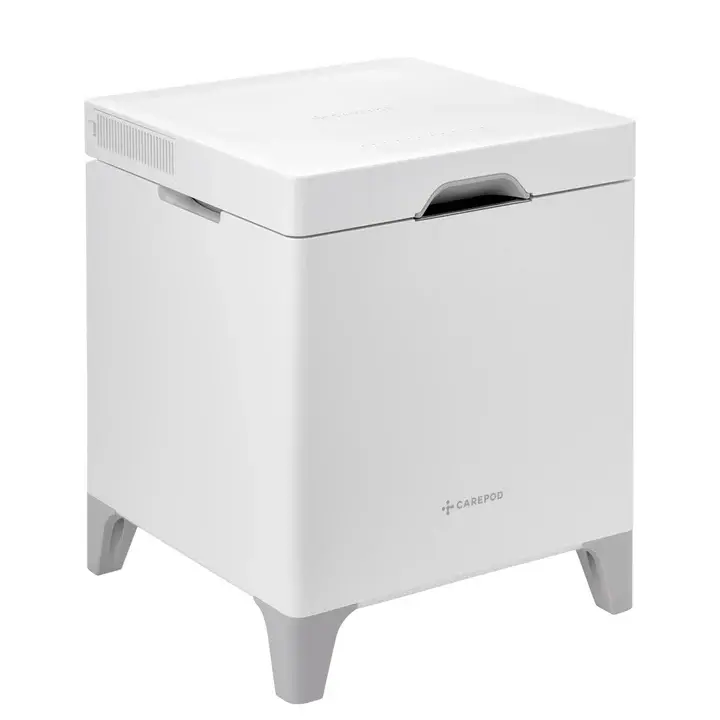 |
Carepod Best for Easy Sanitizing |
304 stainless-steel water tank | 25 dB on low | Filterless oscillator system |
Check Price → Amazon
|
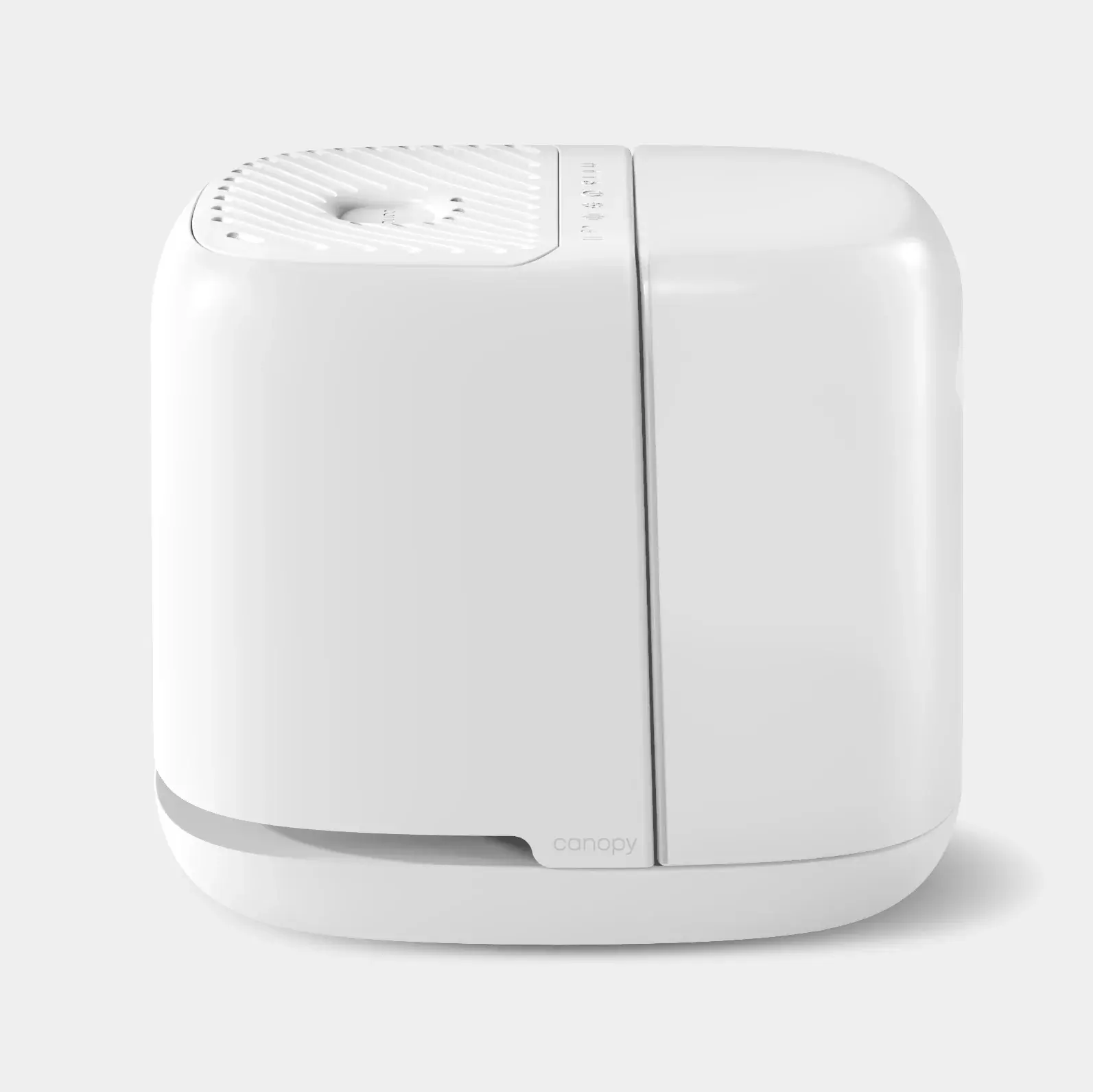 |
Canopy Best for Hard Water |
Evaporative plastic basin system | 32 dB on low | Replaceable paper wicking filter |
Check Price → Amazon
|
- Core Difference: Carepod uses a stainless-steel tank and ultrasonic oscillator. Canopy uses evaporative humidification with a replaceable wicking filter.
- Maintenance: Carepod requires manual cleaning but no recurring filter purchases. Canopy simplifies routine cleaning but requires periodic filter replacement.
- Water Type: Canopy handles mineral-heavy tap water more naturally because the filter captures much of the mineral content. Carepod performs best with filtered or distilled water when minimizing white dust is a priority.
Carepod vs Canopy Humidifier: Dad Test Methodology
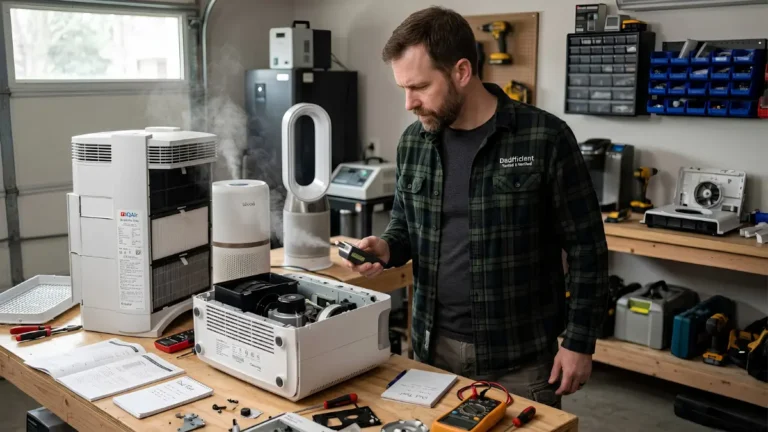
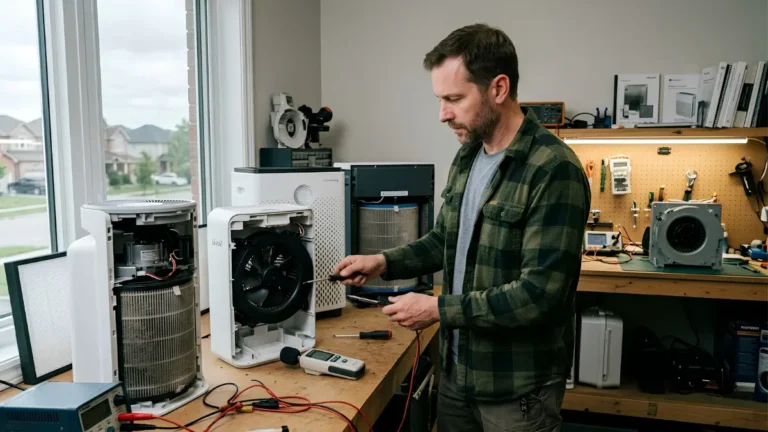
To compare the two systems, we ran both units in a standard 12×12 nursery environment. We measured sound from approximately 3 feet away, monitored mineral buildup when using municipal tap water, and compared teardown and cleaning effort.
1. The Mold-Prevention Approach
Keeping a nursery humidifier clean is one of the biggest maintenance challenges with any system. Carepod approaches the problem with a removable stainless-steel water tank and a relatively simple internal design.
The stainless-steel tank is designed to make thorough cleaning and sanitizing simpler than many humidifiers that rely on more complicated plastic reservoirs and internal channels. Compatible removable components can also be sanitized according to Carepod’s manufacturer cleaning instructions.
Canopy takes a different approach. Its evaporative system uses a wicking filter that pulls water from the basin while a fan moves air across the wet filter. The unit is designed to continue circulating air after use so the internal system can dry rather than leaving standing moisture behind.
2. Cleaning and Maintenance Reality
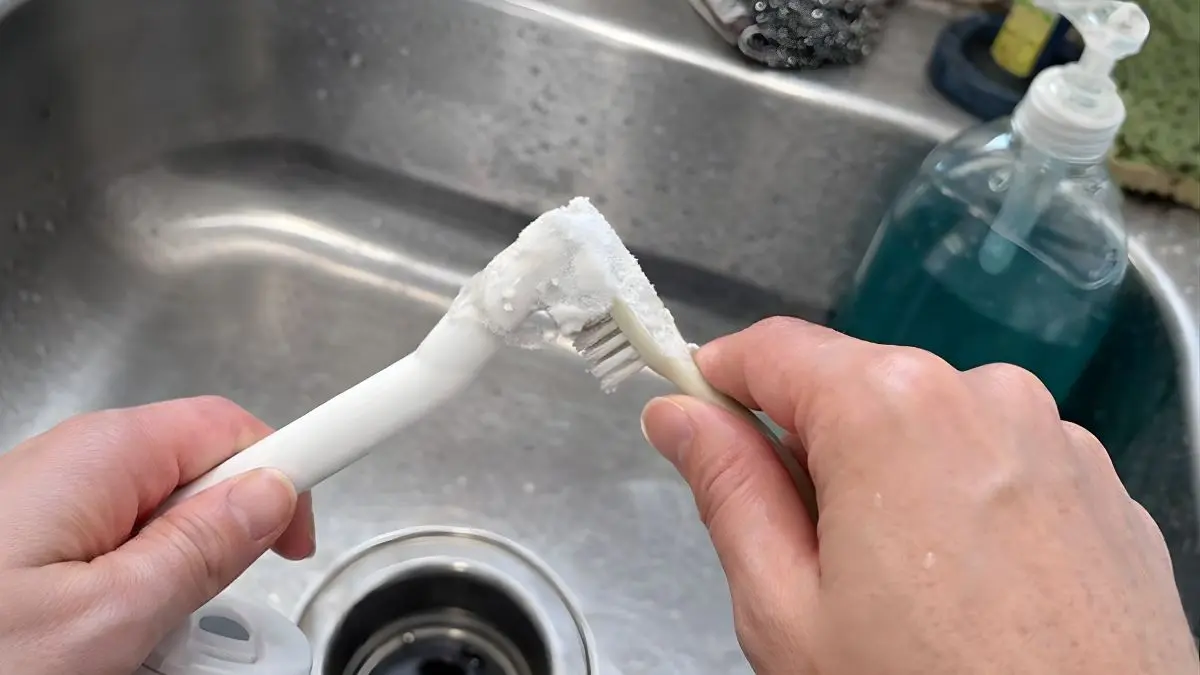
Carepod’s appeal is its relatively simple teardown. The main water-contact components are accessible, and the stainless-steel tank is much easier to visually inspect than many enclosed humidifier reservoirs.
The oscillator wand still requires careful hand cleaning, and its electrical connection should be kept dry according to Carepod’s cleaning instructions.
Canopy is easier during normal day-to-day operation, but the tradeoff is a recurring filter replacement. The filter gradually collects minerals from the water and needs to be replaced on the manufacturer’s recommended schedule.
3. Mist Delivery: Ultrasonic vs. Evaporative
Carepod uses ultrasonic humidification, so you can see a fine cool mist entering the room. This type of system can raise humidity efficiently and operates without the fan noise associated with many evaporative humidifiers.
The tradeoff is water quality. If mineral-heavy tap water is used in an ultrasonic humidifier, some of those dissolved minerals can become airborne as fine white dust and can also accumulate on internal components.
Canopy uses evaporative humidification. You will not normally see a visible mist because moisture is released as humidified air after passing through the wicking filter.
That makes Canopy particularly attractive in hard-water homes because much of the mineral content remains in the filter instead of being dispersed into the room.
Dad Test Notes: Carepod
- Acoustic Output: 25 dB on low in our test setup.
- Teardown: Simple multi-piece design with accessible water-contact surfaces.
- Material: 304 stainless-steel water tank.
- Nursery Practicality: Visible mist and an accessible top mean placement still matters around toddlers.
Check Carepod Price →
4. Operating Costs and Filter Replacements
Carepod has a higher upfront price than many basic humidifiers, but it does not require routine filter purchases. Your ongoing cost depends mainly on the type of water you choose to use.
If your tap water is mineral-heavy and you use distilled or filtered water to reduce white dust, that becomes the primary recurring expense.
Canopy typically has a lower barrier to entry, but its wicking filter is a recurring consumable. Over a longer ownership period, those replacement filters should be included when comparing total cost.
That makes the decision fairly simple: Carepod concentrates more of the cost upfront, while Canopy spreads part of the ownership cost into ongoing filter replacements.
5. Nursery Safety and Smart-Home Compatibility
Both systems use cool-mist or cool-humidification approaches rather than producing hot steam. The
American Academy of Pediatrics
generally recommends cool-mist humidification around children because warm-mist units can present a burn hazard.
There is also an important difference if you use a smart air purifier or separate PM2.5 monitor in the same room.
Ultrasonic humidifiers such as Carepod release microscopic water droplets. Some optical particle sensors can interpret those droplets as airborne particulate matter, which can temporarily increase PM2.5 readings or trigger an automatic purifier response.
Because Canopy uses evaporative humidification instead of visible ultrasonic mist, it is less likely to create this particular sensor interaction.
If you use both devices in the same nursery, our
air purifier vs humidifier guide
explains how to position and operate them together.
Dad Test Notes: Canopy
- Acoustic Output: 32 dB on low in our test setup.
- Maintenance: Low routine effort, with periodic filter replacement required.
- System: Evaporative humidification with a replaceable wicking filter.
- Nursery Practicality: No visible mist, which can make placement around children and electronics easier.
Check Canopy Price →
Carepod vs Canopy: Final Verdict
Choose Carepod if you want the simpler long-term ownership model. Its stainless-steel tank, filter-free design, and low operating noise make it especially appealing if you are comfortable using filtered or distilled water and cleaning the unit yourself.
Choose Canopy if your biggest concern is hard water and convenience. The evaporative system avoids visible mist and greatly reduces the white-dust problem associated with mineral-heavy water, but you have to budget for replacement filters.
For our nursery use case, Carepod gets the slight overall edge because there is no mandatory filter replacement cycle. But in a hard-water home, we would choose Canopy instead.
Frequently Asked Questions
Is the Canopy humidifier worth it?
Canopy can be worth the recurring filter cost if you have hard tap water or specifically want an evaporative humidifier. Its filter captures much of the mineral content that can otherwise contribute to white dust when using an ultrasonic system.
Can I use tap water in the Carepod humidifier?
You can use tap water, but mineral-heavy water can leave deposits on ultrasonic components and contribute to white mineral dust in the room. Filtered or distilled water is the better choice when minimizing mineral buildup is a priority.
Does Carepod or Canopy interfere with baby monitors?
Neither system is designed to interfere directly with a baby monitor’s Wi-Fi signal. The more practical concern is placement: keep any humidifier away from cameras, monitors, outlets, and other electronics so moisture does not collect on or around them.
Sources, Citations & References
- Carepod Manufacturer Information: product construction and manufacturer cleaning guidance.
- Canopy Support: filter design and replacement guidance.
- HealthyChildren.org / American Academy of Pediatrics: pediatric guidance concerning cool-mist humidifiers.