7 Best Steps: How to Use Humidifier for Baby Congestion (2026)
Dadfficient is reader-supported. If you buy through my links, I may earn a commission at no extra cost to you. I only recommend gear that passes the “Dad Test.”
If you are frantically searching for how to use humidifier for baby congestion, it is likely 3:00 AM, and you are awake listening to your infant sound like a tiny, congested pug. When my oldest had his first respiratory bug, I panicked, bought the biggest unit I could find, and turned his nursery into a tropical rainforest. Big mistake. Figuring out how to use humidifier for baby congestion requires more than just filling a tank and hitting a button. If done wrong, you are inviting mold, mineral dust, and ecosystem conflicts with your smart nursery tech.
Learning exactly how to use humidifier for baby congestion safely means placing a cool-mist humidifier at least three feet away from the crib, filling it strictly with distilled water to prevent mineral dust, and keeping the room’s humidity level between 30% and 50% to loosen mucus without promoting mold growth.
Operator’s Summary: How to Use Humidifier for Baby Congestion
- Always choose a cool-mist ultrasonic or evaporative model; warm mist poses severe burn risks.
- Never use tap water. Distilled water is mandatory to avoid aerosolizing minerals.
- Do not add essential oils or medicated vapors to the tank for infants under two years old.
- Maintain a relative humidity between 30% and 50%. Anything higher invites dust mites and mold.
- Daily cleaning with vinegar is non-negotiable to stop bacteria from breeding in the tank.
Step 1: Deploy a Cool Mist (Not Warm Mist) Unit
When searching for a humidifier for baby cough and cold symptoms, you will see two main types: warm mist (vaporizers) and cool mist (ultrasonic/evaporative). The American Academy of Pediatrics (AAP) strictly recommends cool-mist humidifiers for children. Warm mist units boil water to create steam. If a curious toddler pulls the cord, that boiling water becomes a severe burn hazard. Cool mist provides the exact same nasal relief by adding moisture to the air, just without the trip to the emergency room.
Step 2: Optimize Nursery Placement
Placement is a critical part of how to use humidifier for baby congestion correctly. You cannot just drop the unit on the floor next to the crib. First, ecosystem conflict warning: running a humidifier directly under a baby monitor camera or smart sensor will trigger false alarms or fog the lens entirely. Second, placing it on unprotected hardwood floors or wood dressers will ruin the finish over time.
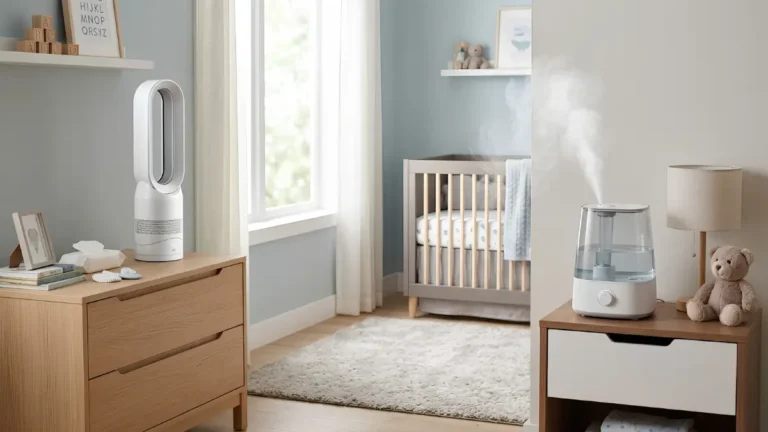
I ran the test in my own home. You need to position the unit at least three feet away from the crib to prevent the baby’s bedding from becoming damp. Elevate it on a small, water-resistant table or use a silicone mat underneath to catch any rogue condensation.
Dad Test Metrics: Standard Ultrasonic Cool Mist Humidifier
- Install Ease: 8/10 (Just plug and play, but cord management is crucial).
- WAF (Wife Acceptance Factor): 9/10 (Sleek modern designs blend right into nursery decor).
- Toddler-Proof: 4/10 (If they reach it, they will dump it. Keep out of reach).
- Reliability: 7/10 (Requires strict daily maintenance to remain safe and operational).
Step 3: Strictly Control the Water Source
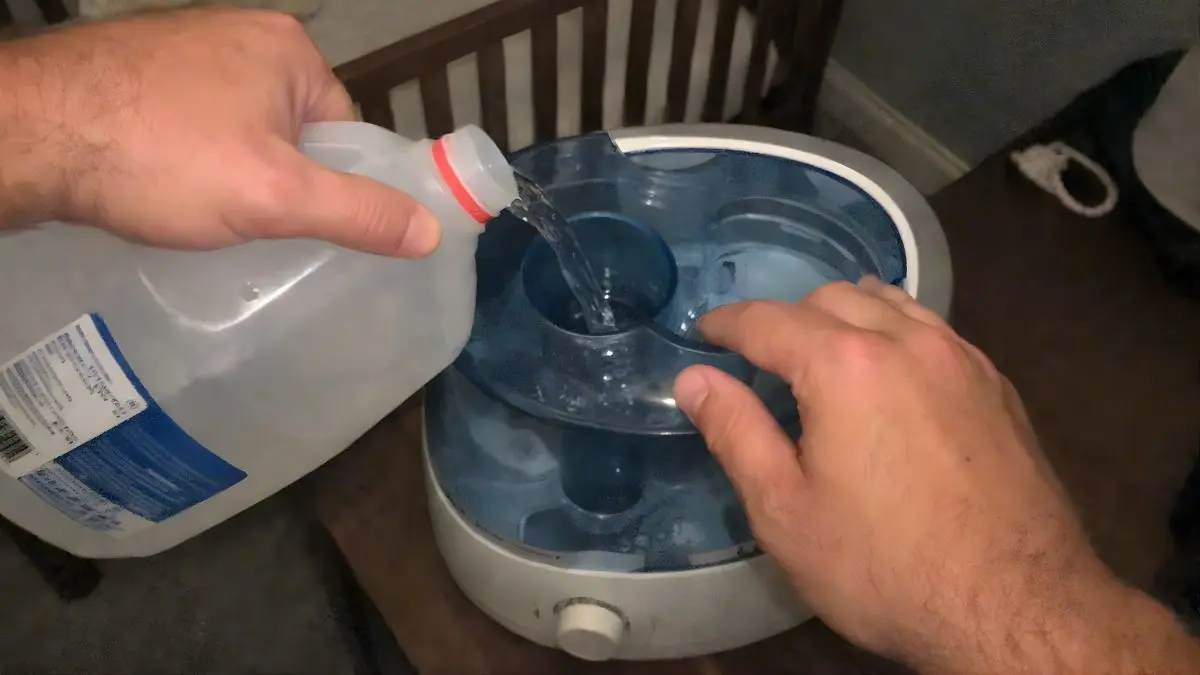
Parents constantly ask what to put in humidifier for baby relief. The answer is incredibly boring: 100% pure distilled water. Nothing else. Tap water contains minerals. When an ultrasonic humidifier vibrates tap water into a mist, it aerosolizes those minerals, creating a fine “white dust” that settles over the nursery and gets inhaled into your baby’s developing lungs. According to the EPA, using distilled water minimizes these microscopic particulate emissions.
Step 4: Say No to Additives and Oils
It is tempting to add eucalyptus drops or medicated menthol liquids directly to the water tank. Do not do it. For babies under two years old, strong volatile organic compounds (VOCs) and essential oils can irritate their tiny airways and actually worsen respiratory distress. Stick to pure, unadulterated moisture. The water itself is the medicine.
Step 5: Regulate with a Hygrometer
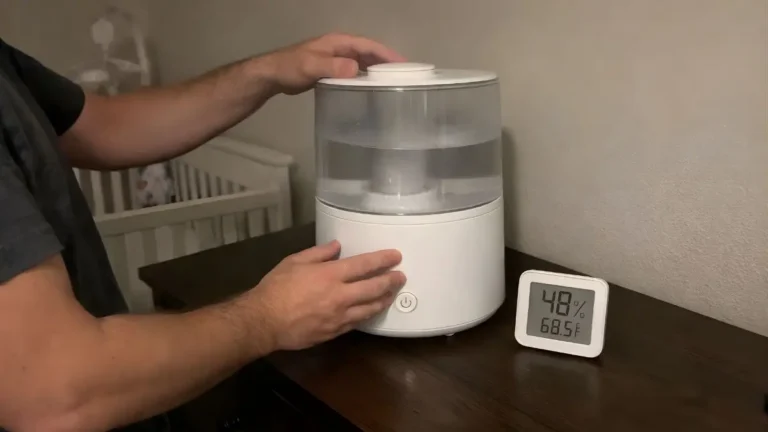
Is a humidifier good for baby cough? Yes, but too much of a good thing is a disaster. If you push the room’s relative humidity above 50%, you create a breeding ground for dust mites and toxic mold spores. Most humidifiers do not have accurate built-in sensors. You need an independent digital hygrometer placed near the crib. Aim for a sweet spot between 30% and 50% relative humidity. Mastering this step is the secret to how to use humidifier for baby congestion without causing a mold issue.
Step 6: Execute Daily Decontamination
A neglected humidifier is a bacteria cannon. Standing water left at room temperature will grow pink mold (Serratia marcescens) and other nasty pathogens in less than 48 hours. Empty the tank completely every single morning. Wipe it dry. Once a week, execute a deep clean using pure white vinegar to dissolve any scale buildup, followed by a thorough rinse. This daily routine is a non-negotiable rule for how to use humidifier for baby congestion safely.
Step 7: Monitor Symptoms and Pediatrician Timelines
A humidifier is a tool to manage symptoms, not a cure for an underlying infection. The moisture helps thin out thick mucus, making it easier for the baby to breathe and feed. However, if your baby is under three months old and running a fever, or if the cough becomes a harsh bark (croup), bypassing home remedies and calling your pediatrician is your immediate next step.
Frequently Asked Questions (FAQ)
Is a humidifier good for baby cough?
Yes, a humidifier is highly effective for a baby’s cough. The cool moisture helps hydrate dry respiratory passages and thins out stubborn mucus, allowing the infant to clear their airways more effectively and sleep better. Learning how to use humidifier for baby congestion properly is one of the few safe, non-medicated interventions recommended by pediatricians.
What to put in humidifier for baby?
You should only put distilled water into a baby’s humidifier. Avoid tap water to prevent mineral dust emissions, and strictly avoid essential oils, vapor rubs, or medicated liquids, as these can cause severe airway irritation in infants.
Should I leave the humidifier on all night for a congested baby?
You can leave it on all night, provided you are monitoring the room’s humidity. Once the room reaches 50% humidity, you should turn the unit off or lower the output setting to prevent condensation from soaking the crib and encouraging mold growth in the nursery.
- American Academy of Pediatrics (AAP): Verified recommendations regarding cool mist over warm mist humidifiers for burn prevention.
- Environmental Protection Agency (EPA): Confirmed data on the use of distilled water to prevent mineral scale and white dust emissions.