Humidifier Causing Cough? 4 Fixes for White Dust, Dirty Water & High Humidity
Dadfficient is reader-supported. If you buy through my links, I may earn a commission at no extra cost to you. I only recommend gear that passes the “Dad Test.”
Humidifier causing cough? A humidifier can sometimes make coughing or airway irritation feel worse if the machine is dirty, ultrasonic mist is carrying minerals into the room, or the room humidity is too high.
The fastest way to troubleshoot it is to stop the humidifier temporarily, check the tank and base for buildup, measure the room humidity, and review the type of water you are using.
If coughing, wheezing, or breathing symptoms clearly seem connected to humidifier use, stop using the unit while you troubleshoot it. If symptoms persist, become severe, or concern you, contact a healthcare professional.
Quick Dad Diagnostics
- White dust around the room: Check whether you are using mineral-heavy tap water in an ultrasonic humidifier.
- Musty odor or visible film: Stop the humidifier and clean it before using it again.
- Room feels muggy: Check the hygrometer and reduce humidity if the room is approaching or exceeding 50% RH.
- Symptoms improve when the humidifier is off: Treat that as a useful clue and inspect the machine, water, and humidity level before restarting it.
Can a Humidifier Cause Cough?
Yes, a humidifier can contribute to coughing or airway irritation under certain conditions.
The problem is usually not humidity itself. It is what the humidifier is adding to the air or how much moisture is being added.
The three main things I would check are:
- airborne minerals from an ultrasonic humidifier
- microbial contamination inside a poorly maintained tank or base
- room humidity that is too high
If you are dealing with a humidifier causing cough symptoms, work through those three possibilities before assuming the humidifier is defective.
How to Tell if the Humidifier Is Making You Cough
It can be hard to separate a humidifier problem from a cold, allergies, asthma, or another respiratory issue.
Instead of trying to diagnose the cause from one symptom, look for a pattern.
Clues that make the humidifier worth investigating include:
- Symptoms start or worsen when the humidifier is running.
- Symptoms improve when you leave the room or turn the unit off.
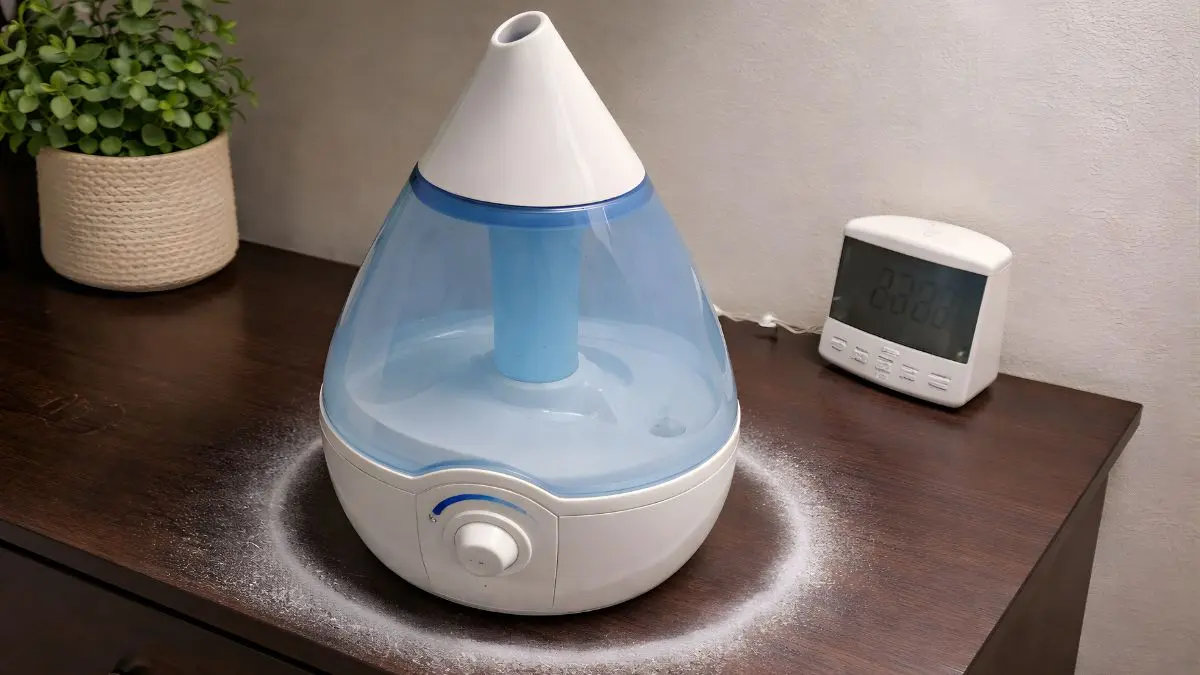
- You can see white mineral residue on nearby furniture.
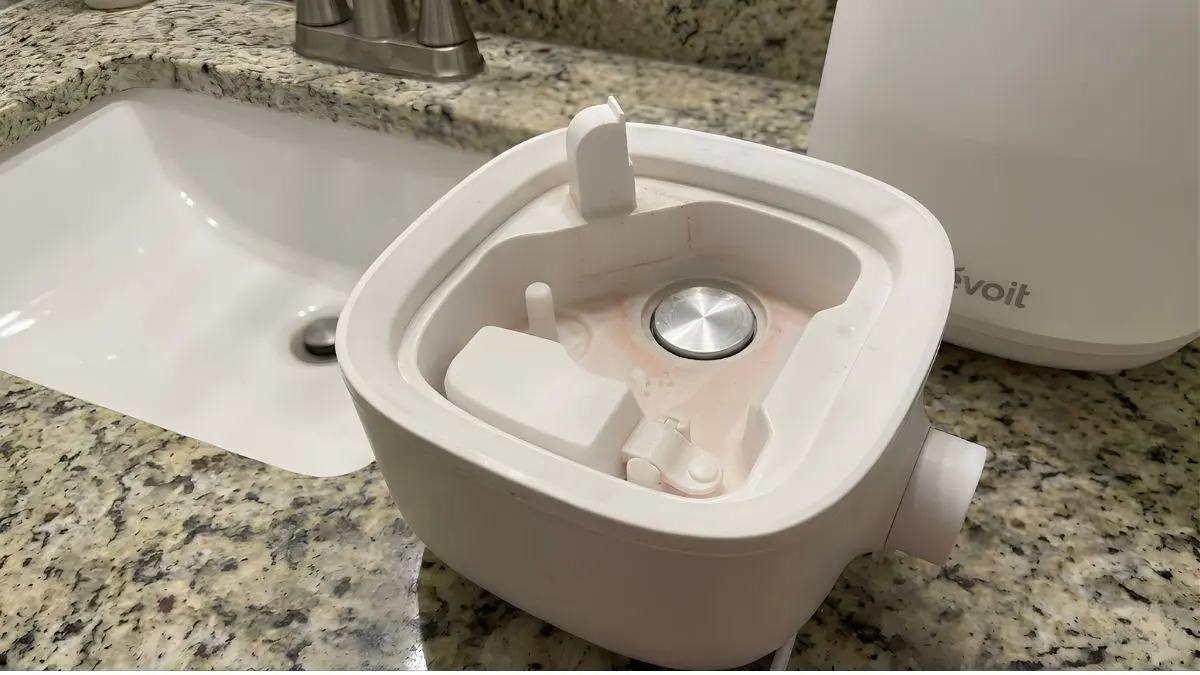
- The tank or base has visible film, discoloration, slime, or buildup.
- The room humidity is consistently above the recommended range.
- The humidifier smells musty or unusual while operating.
Those clues do not prove the humidifier caused the cough, but they tell you the machine and room conditions need to be checked.
3 Reasons for a Humidifier Causing Cough Symptoms
1. White Dust From Ultrasonic Humidifiers
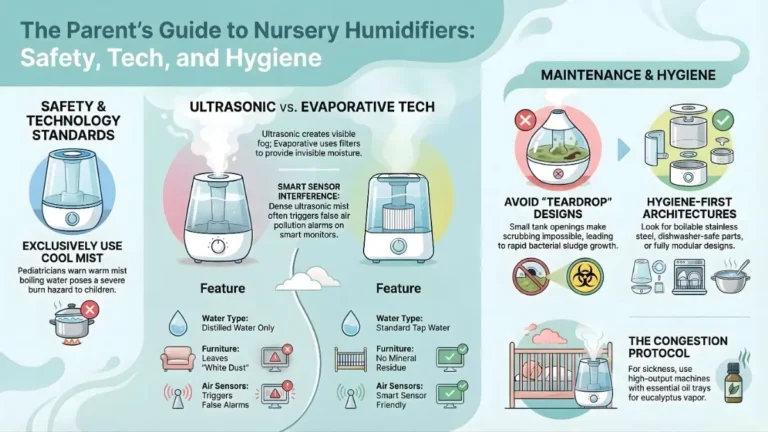
A common cool mist humidifier causing cough concern involves ultrasonic models and mineral-heavy tap water.
Ultrasonic humidifiers create very fine droplets from the water in the tank. If that water contains dissolved minerals, some of those minerals can also be dispersed into the room.
After the water evaporates, the minerals may settle as a fine white residue on furniture and other surfaces.
The EPA recommends using lower-mineral water, such as distilled water, when practical in ultrasonic humidifiers because this can reduce mineral dispersal and scale buildup.
The health effects of airborne mineral dispersal are not fully defined for every situation, so I would not assume white dust is automatically the cause of a cough. But if symptoms appear only when the humidifier is running and you can see mineral residue, it is worth correcting the water source and cleaning the unit.
For more detail, see:
Is Humidifier White Dust Harmful?.
2. Dirty Water, Biofilm, Mold, or Bacterial Growth
Portable humidifiers contain standing water and wet surfaces, which means maintenance matters.
If old water sits in the tank or the machine is not cleaned properly, microorganisms can grow inside the water-contact areas.
A contaminated humidifier may disperse microorganisms or other material into the room while it is operating.
The EPA advises cleaning portable humidifiers regularly and replacing the water frequently to reduce this problem.
3. Room Humidity Is Too High
More moisture is not always better.
The EPA generally recommends keeping indoor relative humidity around 30% to 50%.
If the room is consistently above that range, condensation and dampness can become a problem and conditions may become more favorable for mold and dust mites.
That matters especially if someone in the room already has asthma, allergies, or sensitive airways.
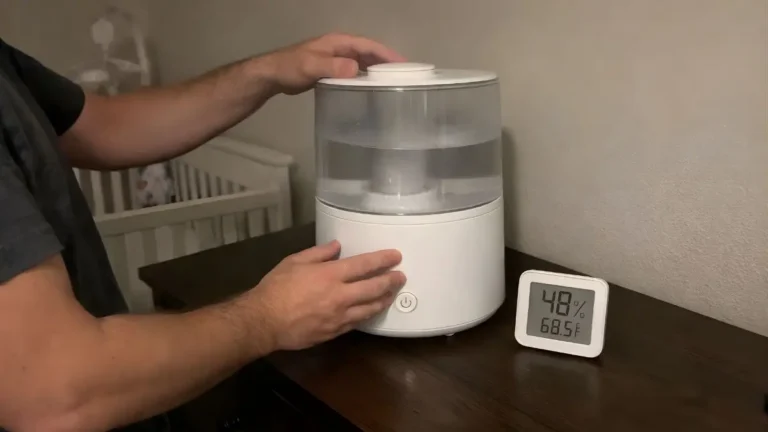
A standalone hygrometer is the easiest way to know whether the humidifier is actually helping or pushing the room too far.
If this humidifier is running in a baby’s or toddler’s room, read our complete
Humidifier Safe for Infants
guide for cleaning, placement, humidity targets, and cool-mist safety.
4 Fixes for Humidifier Causing Cough Symptoms
Fix 1: Stop the Humidifier and Clean It Properly
If symptoms seem tied to humidifier use, the first move is simple: turn the machine off and inspect it.
Unplug the humidifier and empty the tank and base.
Look for:
- slime or film
- discoloration
- white mineral scale
- musty odors
- debris around water-contact surfaces
Clean the humidifier according to the manufacturer’s instructions for your exact model.
Do not assume every humidifier should be soaked in the same amount of vinegar for the same amount of time. Cleaning methods, materials, and electrical layouts vary between models.
After cleaning, rinse any cleaning solution thoroughly according to the manufacturer instructions before operating the humidifier again.
For another cleaning option, see:
How to Clean Humidifier With Hydrogen Peroxide.
Fix 2: Switch to Lower-Mineral Water
If you use an ultrasonic humidifier and notice white residue around the room, switch to lower-mineral water such as distilled water if practical.
This can greatly reduce mineral scale inside the machine and reduce the amount of mineral material dispersed into the room.
It will not fix a dirty humidifier, so you still need to clean the tank and base before changing the water source.
Fix 3: Measure the Room With a Hygrometer
Do not guess based on how much mist you can see.
Use a digital hygrometer somewhere in the room away from the direct mist stream.
Aim for roughly 30% to 50% relative humidity.
If the room is already near 50%, reduce the humidifier output or turn it off.
For overnight use and sick-room humidity, see:
Best Humidity Level for Sleeping When Sick.
Fix 4: Dump Old Water and Refill Daily
Do not continuously top off yesterday’s water.
The EPA recommends emptying, wiping dry, and refilling portable humidifiers daily when they are being used.
That reduces the amount of time water sits stagnant inside the tank and base.
Then follow the deeper cleaning schedule recommended by the manufacturer for your model.
Dad Test: Cough Troubleshooting Checklist
- Stop and test: Turn the humidifier off temporarily and watch whether symptoms change.
- Inspect: Check the tank and base for mineral deposits, film, odor, or discoloration.
- Measure: Keep room humidity around 30% to 50% RH.
- Water: Use lower-mineral water in ultrasonic models when practical.
- Maintenance: Replace old water daily and clean the unit according to the manufacturer instructions.
Should You Switch to an Evaporative Humidifier?
If you are tired of managing white dust from an ultrasonic humidifier, an evaporative model is worth considering.
Evaporative humidifiers use a wick or filter to absorb water while a fan moves air through the damp material.
Because they do not create the same ultrasonic mist, they generally disperse less mineral material into the room.
That does not make them maintenance-free. The tank and filter still need to be maintained, and replacement filters create an ongoing cost.
Want an Evaporative Alternative?
Canopy uses evaporative humidification with a replaceable filter designed to reduce minerals and other material from the water before moisture enters the room.
It is worth considering if your biggest frustration is white dust and you do not mind replacing filters periodically.
Why Does My Humidifier Make Me Cough?
If you are asking why does my humidifier make me cough, look at the timing and room conditions.
If coughing starts after the humidifier turns on, improves when you leave the room, or appears alongside white dust, musty odor, visible contamination, or excessive room humidity, stop using the machine and troubleshoot those factors.
The humidifier may not be the only possible cause, so persistent or worsening respiratory symptoms should be evaluated by a healthcare professional.
Frequently Asked Questions
Can humidifier cause cough?
Yes, a humidifier can contribute to coughing if it is dispersing contaminants or minerals into the room or if the room becomes excessively humid. Stop the machine, inspect and clean it, check the water source, and measure the room humidity.
Why does my cool mist humidifier make me cough?
A cool mist humidifier causing cough symptoms may be related to mineral dispersal from an ultrasonic model, contamination inside the tank or base, or room humidity that is too high. The exact cause cannot be determined from the cough alone, so inspect the setup rather than assuming the humidifier type itself is the problem.
Can a humidifier cause a cough in toddlers?
A poorly maintained humidifier or excessive room humidity may irritate sensitive airways in children. Keep the unit clean, maintain moderate humidity, and stop using it if symptoms appear to worsen while it is running. Contact the child’s healthcare professional if coughing persists or breathing symptoms concern you.
How do I know if my humidifier has mold or contamination?
Inspect the tank and base for visible film, discoloration, slime, unusual spots, or a persistent musty odor. If you see contamination, stop using the humidifier and clean it according to the manufacturer’s instructions before restarting it.
Can white dust from a humidifier cause coughing?
Ultrasonic humidifiers can disperse minerals from tap water into the air as white dust. The health effects of mineral dispersal are not fully defined in every situation, but if coughing appears to correlate with humidifier use and white residue is visible, switch to lower-mineral water and clean the machine before using it again.
-
Environmental Protection Agency (EPA):
Guidance on portable humidifier cleaning, microorganisms, mineral dispersal, water quality, daily water replacement, and indoor humidity. -
HealthyChildren.org / American Academy of Pediatrics:
Guidance on cool-mist humidifiers, dry coughs, stuffy noses, and the importance of keeping humidifiers clean around children.