3 Crucial Rules for Safe Setup: Where to Place Humidifier in Baby Room (2026)
Dadfficient is reader-supported. If you buy through my links, I may earn a commission at no extra cost to you. I only recommend gear that passes the “Dad Test.”
Operator’s Summary: The Key Takeaways
- The 3-Foot Rule: Humidifiers and their power cords must be a minimum of three feet away from the crib to prevent strangulation and burn hazards.
- Height Matters: Always place the unit on a raised, waterproof surface—never directly on the carpet.
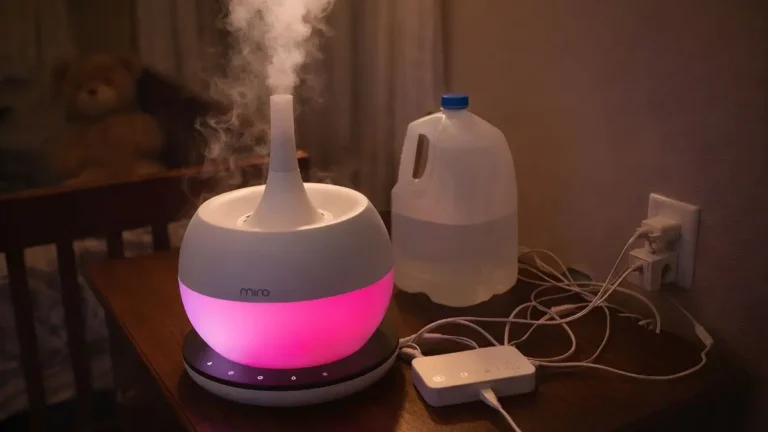
- Mist Direction: Aim the nozzle toward the center of the room, keeping the moisture away from walls, soft fabrics, and the baby’s direct breathing zone.
- Temperature Choice: Only use cool mist humidifiers. Warm mist units present a severe scalding risk for infants.
If you are trying to figure out exactly where to place humidifier in baby room setups, you are making a vital decision for your infant’s safety.
When my first son was born, his initial bout of congestion sent me scrambling to set up a nursery humidifier at 2:00 AM.
In my sleep-deprived state, I placed it on the floor, right next to the crib, pointing directly at his face.
The next morning, I woke up to a soaking wet carpet, damp crib sheets, and a power cord dangling dangerously close to his grasping hands.
It was a complete failure in basic nursery safety protocols.
Figuring out the proper placement isn’t just about maximizing the machine’s efficiency; it is a critical air-quality decision.
Placing it incorrectly can lead to mold growth, water damage, and severe physical hazards.
Where to place humidifier in baby room: The safest location is on a raised, flat, and water-resistant surface at least three feet away from the crib.
It must be positioned so the mist blows toward the open center of the nursery—away from the baby, walls, and soft fabrics—while keeping the power cord completely out of reach.
Where to Place Humidifier in Baby Room: 3 Safe Spots
Through trial, error, and consulting pediatric safety guidelines, I have narrowed down the layout to exactly three optimal locations for a baby safe room humidifier.
Every nursery is different, but one of these three configurations will solve the problem of where to place humidifier in baby room environments based on your specific floor plan.
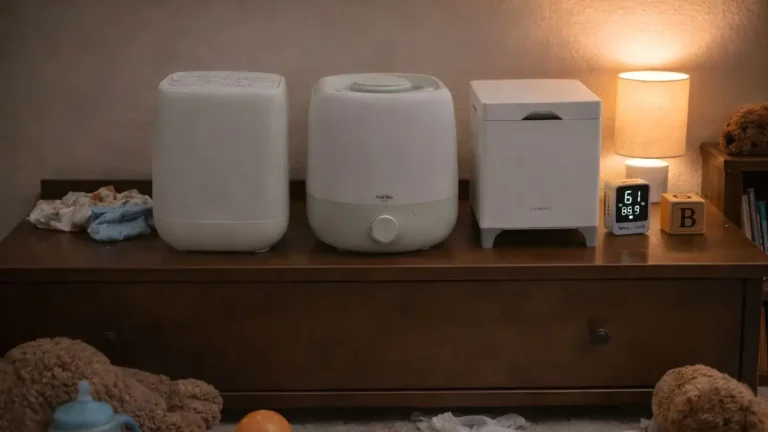
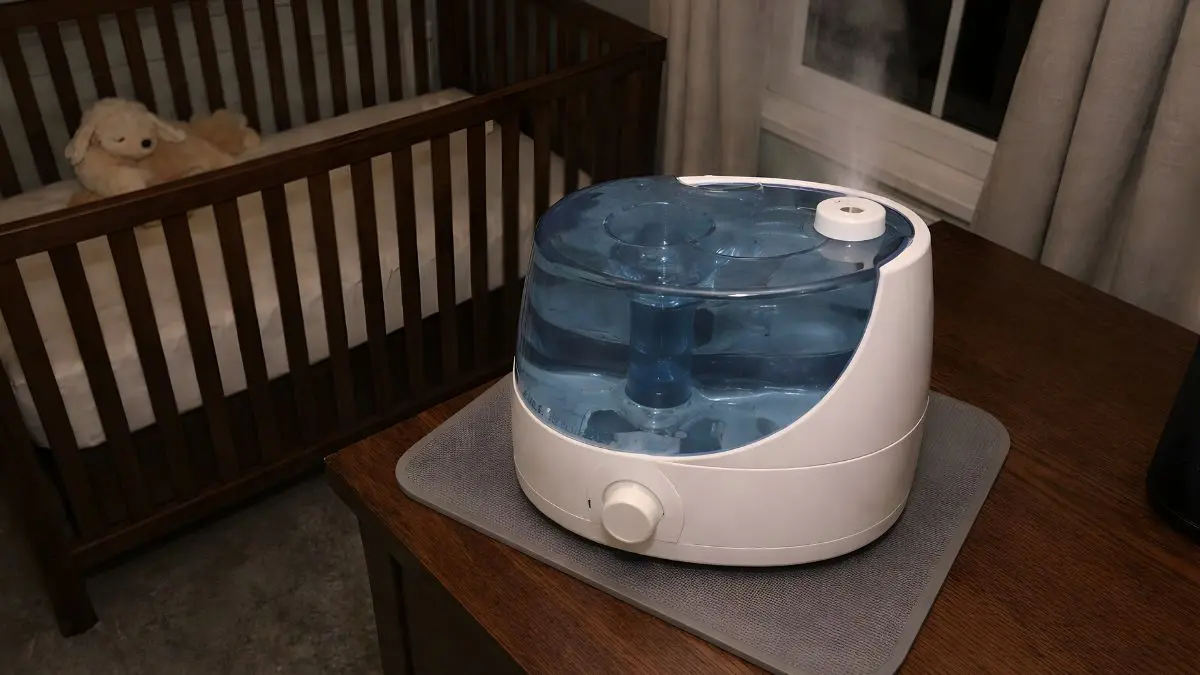
1. The Waterproofed Dresser Top
This is my primary recommendation and the setup I currently use.
Most dressers are situated against a wall, leaving plenty of distance between the unit and the crib.
The height of a standard dresser allows the mist to mix with the room’s air before gravity pulls the heavier water droplets to the floor.
However, wood and water do not mix.
You must place a silicone baking mat or a dedicated plastic tray under the humidifier to catch the inevitable condensation or tank-fill spills.
Ensure the dresser is at least three feet from the crib, and route the power cord straight down the back of the furniture.
Secure it to the wall with a cable raceway so a crawling infant cannot pull the unit down on top of themselves.
2. A Dedicated Corner Nightstand
If your dresser is too close to the crib, a small, dedicated corner nightstand or end table is the next best option.
Tucking the humidifier into a corner keeps it out of the general foot traffic area.
This reduces the risk of you kicking it over during a middle-of-the-night diaper change.
The critical factor here is mist trajectory. Do not point the nozzle into the corner.
Aim the exhaust directly toward the center of the room.
If the mist hits the adjacent walls before evaporating, it will cause the paint to peel and create a prime breeding ground for black mold.
3. The Low Bookshelf Across the Room
For smaller nurseries, finding a three-foot clearance can be difficult.
Placing the unit on a sturdy, low bookshelf on the opposite side of the room is highly effective.
Because the humidifier is further away, you can run it on a slightly higher setting to ensure the relative humidity (RH) reaches the crib area.
You must ensure the bookshelf is properly anchored to the wall.
Adding a tank full of water to the top of an unanchored bookshelf alters its center of gravity, creating a severe tipping hazard when your toddler inevitably tries to use the shelves as a ladder.
Is a Humidifier Safe for Infants?
The short answer is yes, but only if you use the correct hardware.
Understanding if a humidifier is safe for infants comes down to temperature and maintenance.
The American Academy of Pediatrics (AAP) explicitly recommends using only a cool mist humidifier.
You must absolutely avoid warm mist humidifiers or vaporizers in a baby’s room.
Warm mist units boil water to create steam. If a child pulls the unit over, or if you trip over the cord in the dark, the boiling water can cause severe, immediate third-degree burns.
Cool mist humidifiers (typically ultrasonic or evaporative) use room-temperature water.
While ultrasonic units are quieter, they can disperse “white dust” (minerals from the water) into the air.
If you run an ultrasonic unit, I highly recommend using distilled water rather than tap water to protect your baby’s developing lungs from mineral deposits.
Pros and Cons of Humidifier in Baby Room
Before you introduce a water tank into your nursery ecosystem, you need to understand the operational realities of where to place humidifier in baby room configurations.
Here are the pros and cons.
The Pros
- Mucus Clearance: Infants are obligate nasal breathers. When they get a cold, they cannot blow their noses. Maintaining an indoor humidity level between 30% and 50% keeps their nasal passages moist, thinning the mucus and allowing them to breathe (and sleep) more easily.
- Skin Hydration: During the winter months, centralized heating strips moisture from the air, leading to dry, cracked skin and exacerbating conditions like baby eczema. A humidifier restores that baseline moisture.
- White Noise Generation: Even the quietest ultrasonic models emit a low-decibel hum, which acts as a secondary white noise machine, helping to mask household sounds.
The Cons
- The Mold Threat: If left uncleaned, the dark, damp interior of a humidifier tank will rapidly grow pink bacteria (Serratia marcescens) and black mold. Pumping mold spores into your infant’s lungs is vastly worse than dry air.
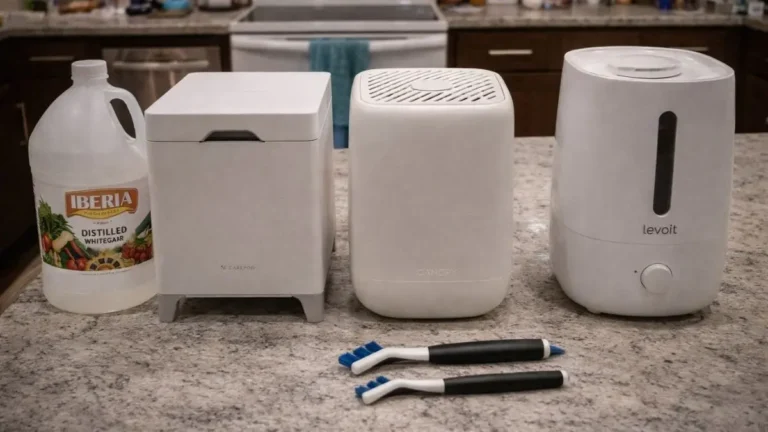
- Maintenance Burden: You cannot just fill it and forget it. A baby safe room humidifier requires daily emptying and wiping, plus a weekly deep clean with white vinegar.
- Ecosystem Conflicts: Over-humidifying the room (above 60% RH) can damage your baby monitor camera lenses through internal condensation and warp hardwood floors.
What Makes a Baby Safe Room Humidifier?
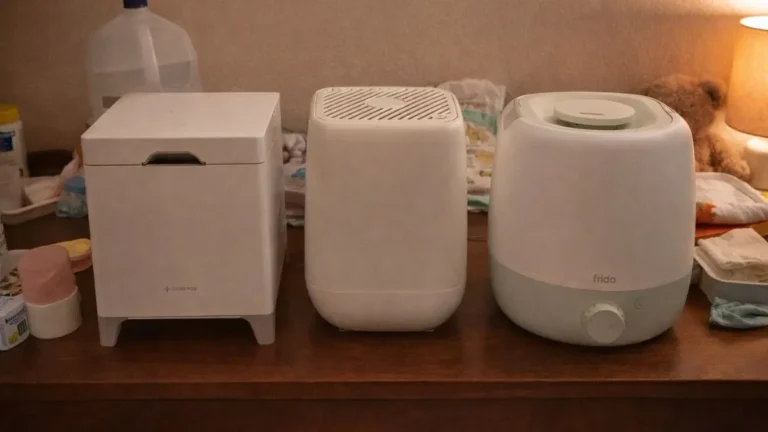
Not all humidifiers are built for the nursery. When sourcing your hardware, you need a unit that mitigates risk.
A true baby safe room humidifier will lack bright, flashing LED screens that disrupt circadian rhythms.
It must have an auto-shutoff feature when the tank runs dry, preventing the internal motor from burning out and causing a fire hazard.
Furthermore, I recommend units with top-fill designs; dragging a dripping, bottom-fill tank across the house every night gets old very quickly.
Crucially, you need to monitor the output. You cannot manage what you do not measure.
I keep an independent digital hygrometer on my son’s nightstand to track the exact relative humidity at his level.
If the hygrometer reads 50%, I shut the humidifier off, regardless of whether he is congested.
Dad Test Metrics: Standard Cool Mist Nursery Setup
- Install Ease: 7/10 (Requires careful cord routing and wall anchoring for safety).
- WAF (Wife Acceptance Factor): 9/10 (Saves sleep when the baby is sick).
- Toddler-Proof: 4/10 (If they can reach it, they will spill it. Height is mandatory).
- Reliability: 6/10 (Requires strict daily and weekly maintenance to remain safe).
Frequently Asked Questions (FAQ)
Should a humidifier run all night in a baby room?
Yes, you can run a humidifier all night, provided you are monitoring the room’s humidity levels.
The Environmental Protection Agency (EPA) recommends keeping indoor humidity between 30% and 50%.
If the room exceeds 50%, you should turn the unit off to prevent condensation on the windows and subsequent mold growth.
Units with built-in humidistats that automatically shut off when the target humidity is reached are highly recommended for overnight use.
Can a humidifier cause a baby to cough?
If the humidifier is not cleaned properly, yes.
A dirty humidifier tank breeds bacteria and mold, which are then aerosolized and blasted into the nursery air.
Inhaling these pathogens can trigger coughing, asthma flare-ups, and respiratory infections.
Additionally, using tap water in an ultrasonic humidifier can create mineral dust that irritates an infant’s lungs.
Always use distilled water and adhere to a strict weekly cleaning schedule using white vinegar.
Where do I point the humidifier nozzle?
You should point the humidifier nozzle toward the open center of the room.
Never point the mist directly at the crib, as this can cause the baby’s sleep environment to become damp, dropping their body temperature and inviting mold into the mattress.
Likewise, do not point it directly at walls, curtains, or wooden furniture, as the concentrated moisture will cause structural damage and fabric mildew.
- American Academy of Pediatrics (AAP): Verified recommendations against warm mist humidifiers due to burn risks and endorsement of cool mist units for infant congestion.
- Environmental Protection Agency (EPA): Verified indoor air quality standards, specifically the mandate to maintain indoor humidity between 30% and 50% to prevent mold proliferation.