4 Proven Fixes for a Vicks Humidifier Making Noise in 2026
Dadfficient is reader-supported. If you buy through my links, I may earn a commission at no extra cost to you. I only recommend gear that passes the “Dad Test.”
If you have a Vicks humidifier making noise—like a loud squealing, grinding, or popping—the most common culprit is mineral buildup on the ultrasonic transducer or the fan motor.
To fix it immediately, empty the water tank and soak the base reservoir in pure white vinegar for 20 minutes to dissolve the scale. Then, ensure the unit is sitting on a hard, flat surface to prevent fan housing vibration.
Key Takeaways (The Operator’s Summary)
- The Squeal: High-pitched whining means calcium scale has calcified on the ultrasonic disk. It needs a vinegar soak.
- The Grind: A low mechanical rumble indicates the intake fan is either clipping the housing or suffocating on a soft surface.
- The Boil: Warm mist models are essentially kettles. A loud popping noise means the heating element is coated in hard water minerals.
- The Gurgle: Random glugging is the vacuum seal releasing air. It is normal, but can be minimized by ensuring the tank cap is perfectly threaded.
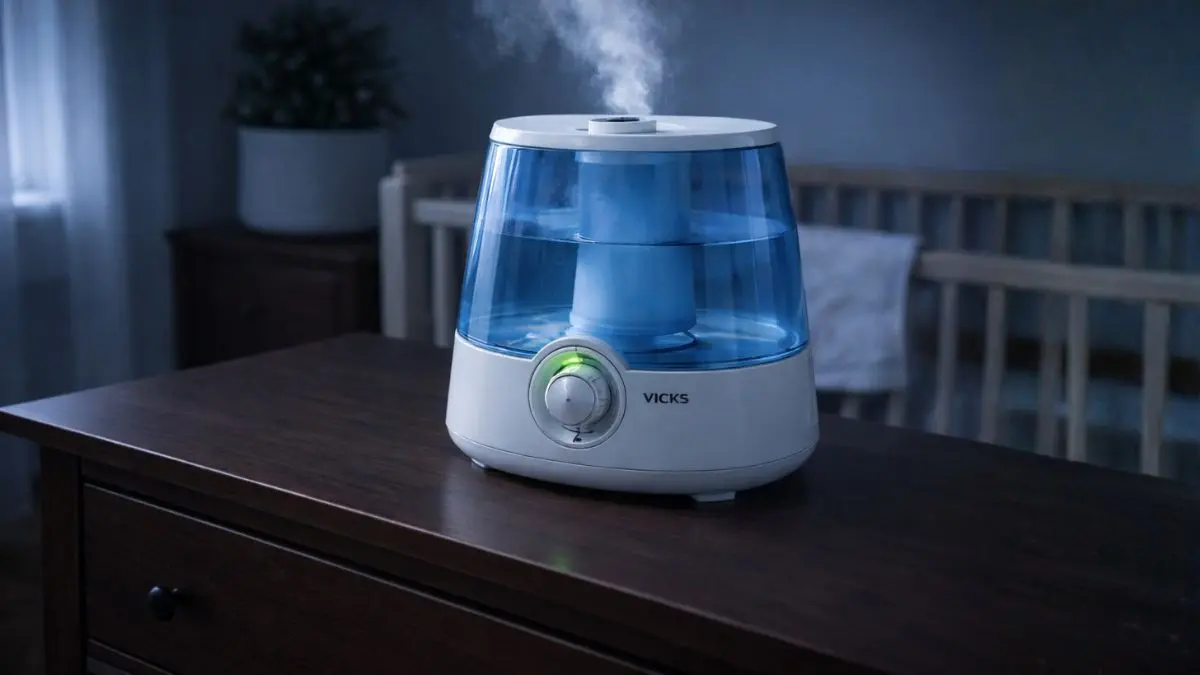
It is 2:00 AM. You finally got the baby down after a brutal sleep regression cycle.
You flip on the nursery humidifier to combat the dry winter air. Instead of a soothing white noise hum, the machine sounds like a dying lawnmower.
Household peace is immediately threatened.
I have been there. When dealing with a Vicks humidifier making noise, it usually falls into one of four distinct audio profiles: squealing, grinding, popping, or aggressive gurgling.
You do not need to throw the unit in the trash just yet.
(If you are dealing with other nursery tech acting up, you can check out our other troubleshooting guides for similar fixes).
Most of these acoustics are caused by simple physics, hard water friction, or improper placement. Here is the exact protocol to diagnose and execute the fix.
Fix 1: Stop the Vicks Humidifier Squealing Like Mice
If you hear a high-pitched, metallic whine—often described as a Vicks humidifier squealing like mice—you are dealing with an ultrasonic friction issue.
Cool mist Vicks models operate using an ultrasonic transducer. This is a small metal or ceramic disk located in the base of the unit.
It vibrates at a microscopic, high-frequency rate to shatter water droplets into a fine mist.
When you use standard tap water, the dissolved minerals (calcium and magnesium) separate from the water. Over time, they bake onto that disk.
When the disk tries to vibrate against a concrete-like layer of scale, it creates a high-pitched squeal. If left untreated, this will eventually burn out the motor entirely.
The Setup Shortcut: The Vinegar Flush
To silence the squeal, you need to strip the scale.
- Unplug the unit and remove the water tank.
- Empty all remaining water from the base reservoir.
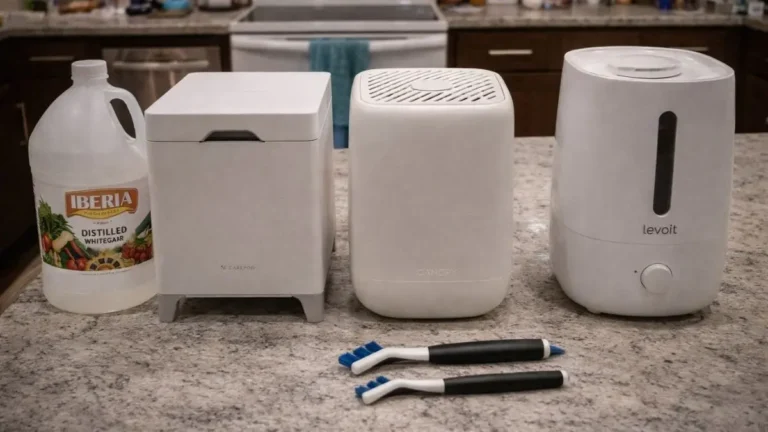
- Pour one cup of undiluted, distilled white vinegar directly into the base. Ensure the transducer disk is completely submerged.
- Let it sit for exactly 20 minutes. Do not rush this. The acetic acid needs time to break the molecular bonds of the calcium.
- Take a soft-bristled toothbrush and gently scrub the transducer. Do not use a wire brush or metal scraper, which will permanently destroy the disk.
- Rinse thoroughly with cold tap water.
To prevent this from happening again, the Environmental Protection Agency (EPA) strongly recommends using distilled water in ultrasonic humidifiers. Distilled water has zero mineral content, meaning zero scale buildup and zero “white dust” settling on your nursery furniture.
Fix 2: The Vicks Humidifier Fan Grinding Fix
A deep, mechanical vibration or a rattling sound is an entirely different beast. This is an airflow and clearance issue.
The Vicks humidifier fan grinding fix usually requires adjusting the unit’s physical environment.
Inside the base of the humidifier is a small intake fan that pushes the mist up through the chimney.
If the fan bearings are dry, or if the plastic fan blades are gently clipping the edge of the housing, you get a grinding sound.
More commonly, the intake vents on the bottom of the machine are simply being suffocated.
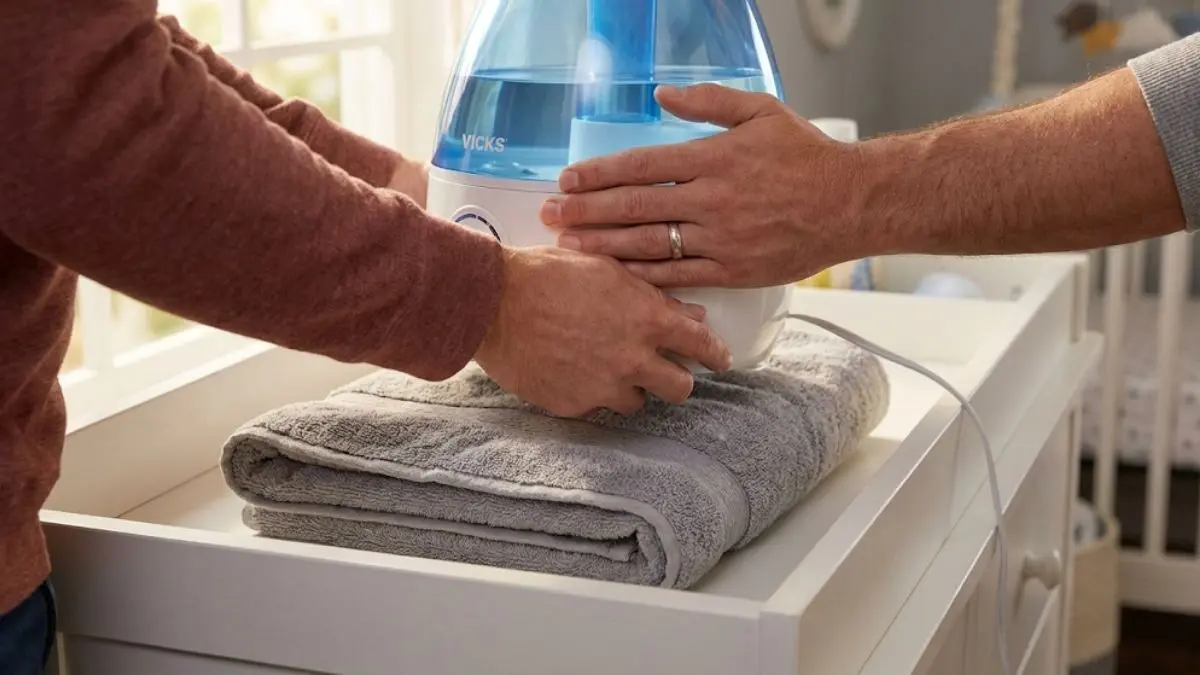
Many parents place the humidifier on a folded towel to protect their wooden dressers from moisture. This is a massive mistake.
The soft fabric compresses into the intake vents on the underside of the base. This starves the fan of air, causing it to overwork, overheat, and grind.
The Towel Test and Airflow Check
Remove the towel immediately. If you need to protect the furniture, place the humidifier on a hard plastic serving tray or a dedicated silicone waterproof mat.
The unit must sit flush on a rigid surface so the rubber feet can provide the necessary millimeter of clearance for the air intake.
If the grinding persists on a hard surface, unplug the base, empty it, and turn it upside down. Look into the fan grate with a flashlight.
Hair, heavy dust, or pet dander frequently gets sucked into this vortex and wraps around the fan axle. Use a can of compressed air or a pair of long tweezers to extract any debris choking the fan blade.
Fix 3: Managing the Vicks Warm Mist Boiling Noise
If you own a Vicks Warm Mist vaporizer and you hear a heavy bubbling, popping, or crackling sound, do not panic.
Some level of noise is inherent to the machine’s design. Unlike ultrasonic models, warm mist vaporizers actually boil the water to create steam.
The sound of water boiling is completely normal. However, if the Vicks warm mist boiling noise becomes aggressively loud, you have a severe maintenance issue on your hands. If it sounds like a heavy rock tumbling inside a tin can, it is time to intervene.
Inside the boiling chamber is a heating element. Just like the ultrasonic disk, this element attracts mineral deposits from hard water.
When a thick layer of scale coats the heating element, the water becomes trapped beneath the scale. As it boils, it violently blasts through the crust, creating loud pops and bangs.
Silencing the Boiler
To fix this, you must descale the heating element. Unplug the machine and let it cool completely for at least 30 minutes.
Remove the cooling chamber and access the heating element. Submerge it in pure white vinegar for 20 to 30 minutes, then wipe away the sludge with a cloth.
Safety Note: The American Academy of Pediatrics (AAP) strongly recommends against using warm mist humidifiers in toddler or infant rooms due to the severe risk of tipping and scalding burns. If you are running a warm mist unit in a kid’s room, I highly recommend swapping it out for a cool-mist ultrasonic model to eliminate the hazard entirely.
Fix 4: Silencing the Random Tank Gurgle
The final noise profile is a sudden, deep “glug-glug” sound that happens randomly throughout the night.
This is the sound of air entering the water tank to replace the water that has been processed into the base.
This is a gravity-fed system. As water leaves the tank, a vacuum is created.
The spring valve at the bottom of the cap releases water into the base, and air rushes up to fill the void. While you cannot eliminate this noise entirely, an excessive or continuous gurgling means the vacuum seal is compromised.
The Cap Check
If it is gurgling every few minutes, check the tank cap.
If the cap is cross-threaded, cracked, or if the rubber O-ring gasket has degraded, air is leaking into the tank too quickly.
Empty the tank, inspect the rubber seal on the cap, and carefully re-thread it. Ensure it is locked in tightly. A proper seal will reduce the glugging to a quick, quiet burst only once every hour or two.
Frequently Asked Questions (FAQ)
Why is my Vicks humidifier making noise and squealing like mice?
A high-pitched squealing noise is caused by hard water minerals calcifying on the ultrasonic transducer disk. When the machine powers on, the disk struggles to vibrate against the hardened scale. This creates a high-frequency metal-on-mineral friction sound. Soaking the base in white vinegar for 20 minutes will dissolve the scale and stop the noise.
What is the Vicks humidifier fan grinding fix?
A grinding fan is usually caused by the unit sitting on a soft surface, like a carpet or a towel. This blocks the air intake vents on the bottom of the machine, causing the motor to strain and vibrate heavily. To fix it, move the humidifier to a hard, flat surface like a wooden nightstand or a plastic tray to restore proper airflow.
Is the Vicks warm mist boiling noise normal?
A low, consistent bubbling sound is normal for a warm mist humidifier because the machine uses a heating element to actively boil water into steam. However, if the boiling noise becomes aggressively loud, popping, or crackling, it indicates a problem. A thick layer of mineral scale has built up on the heating element and requires immediate descaling with vinegar.
- Environmental Protection Agency (EPA): Verified guidelines on the use of distilled water to prevent scale and white dust in ultrasonic humidifiers.
- American Academy of Pediatrics (AAP): Verified safety warnings regarding the burn hazards of warm mist vaporizers in pediatric settings.
- Vicks Manufacturer Manuals: Verified the weekly descaling protocol and 20-minute vinegar soak requirements for component longevity.